
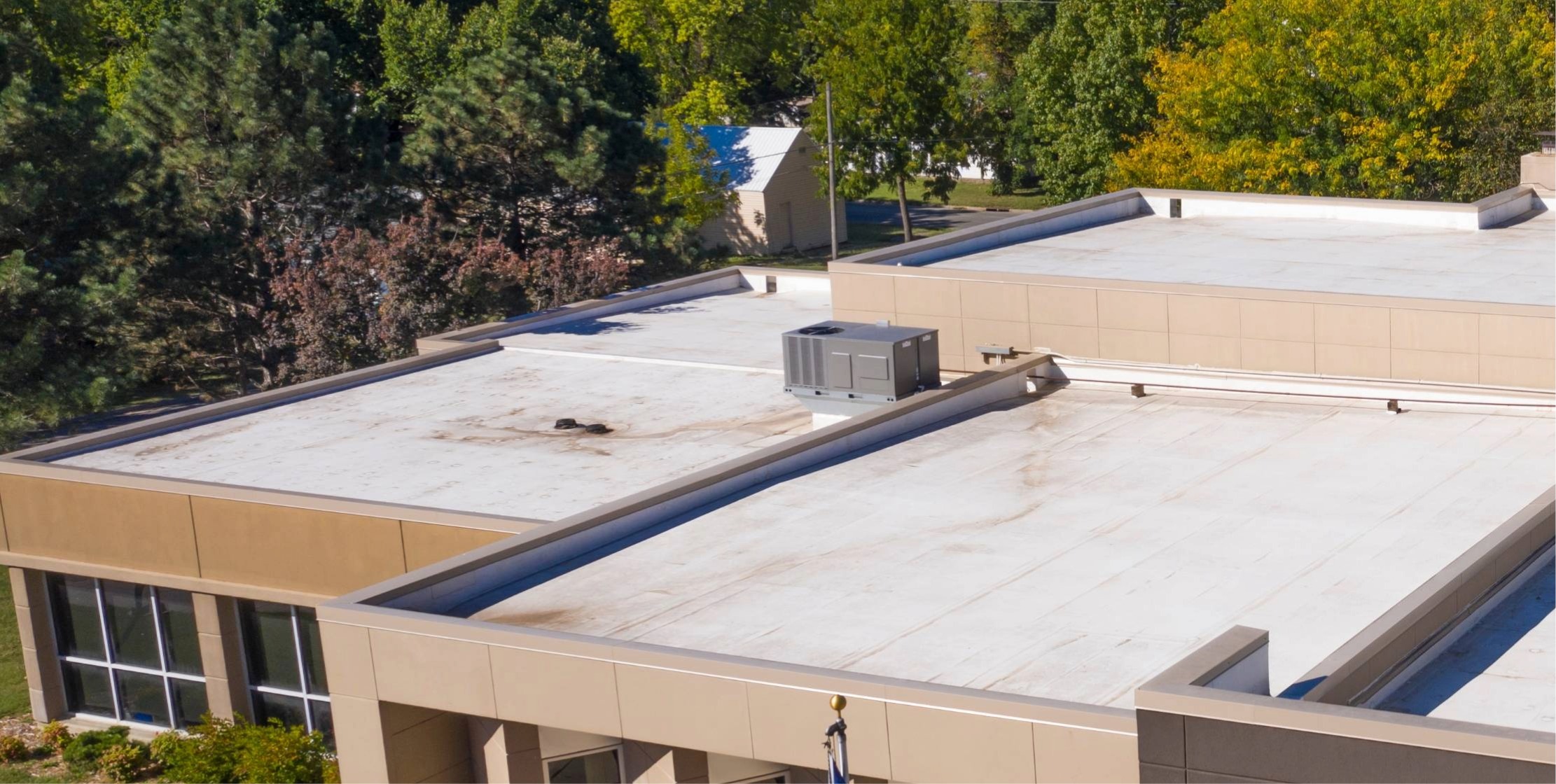
How Parapet Walls Function in Low-Slope Roof Systems
On many low-slope commercial buildings, the parapet forms the edge of the roof systemRoof Types - A roof system (roof assembly) is the entire series of roofing layers and components above the roof deck that work together to weatherproof the building. More. Instead of ending at an overhanging eaveArchitectural Features - An eave is the lower roof edge that extends past the exterior wall, usually where water leaves the roof and enters a gutter. More, the roof membranePrimary Roof Covering - A single-ply membrane is a roof covering that uses one continuous layer of material to waterproof low-slope roofs. More runs vertically up the parapet wall and is secured beneath coping or edge metal.
Because the membrane changes direction at this transition, from horizontal to vertical, it requires flashing at the base and secure termination at the top. These roof-to-wall transitions are one of the most common locations for roof leaks, which is why parapet walls require careful detailing.
Parapet walls also influence wind upliftRoof Problems - Wind uplift is the upward force exerted on a roof system when wind over a building creates suction and pulls against the roof assembly. More resistance. When wind moves across the roof and meets the vertical wall, pressure changes create uplift forces at the perimeter. Fastener density is often reinforced at parapets for this reason, especially on roofs designed for long-term NDL (No Dollar Limit) Warranties and high wind ratings.