EPDM, TPOPrimary Roof Covering - TPO (thermoplastic polyolefin) is a white roof covering used on flat (low slope) roofs, commonly installed on commercial buildings to create a continuous waterproof surface. More, and PVC comprise the most used materials on low slope commercial roof systems. Each system is designed to make low slope roofs durable, simple to install, and cost effective. Before comparing these membranes, let’s examine the characteristics of each one.
Table of Contents
What Is EPDM in Commercial Roofing?
EPDM, short for ethylene propylene diene monomer, is one of the oldest low slope roofing technologies, and a useful acronym for a long name. Commonly known as a rubber roof, EPDM is a synthetic rubber membrane that can be fully adhered to the roof deckComponents - A roof deck is the structural surface connected to a building’s framing that supports the roof system installed above it. More or just glued around the perimeter using adhesives. This eliminates the need for mechanical fasteners that could puncture the membrane and create vulnerabilities to leaks. EPDM can also be ballasted.
It’s often installed in overlapping courses, much like shingles. Unlike shingles, this overlapping creates a waterproof layer, not a water-shedding layer. Rolls typically range from 10 to 12 feet wide to minimize the number of seams and simplify installation.
This system can be used on roofs that drain into gutters, scuppers, or internal drainsComponent - An internal drain is a roof drain installed in the roof surface that collects water and directs it into piping inside the building. More, making it a versatile option for many low slope applications.
What Is TPO in Commercial Roofing?
TPO, or thermoplastic polyolefin, is a heat-molded plastic roofing membrane that’s commonly installed over rigid foam board insulation. It’s available in wide sheets, typically 10 to 20 feet wide, which reduces the number of seams and simplifies installation.
TPO is valued, and increasingly popular, for its versatility. It can be fully adhered using adhesive, mechanically fastened with screws, or ballasted with gravel. Heat welding is commonly used to fuse seams without chemicals and remains effective even in cold weather. In colder conditions, installers use higher welding temperatures and perform more frequent pull tests to ensure secure seals.
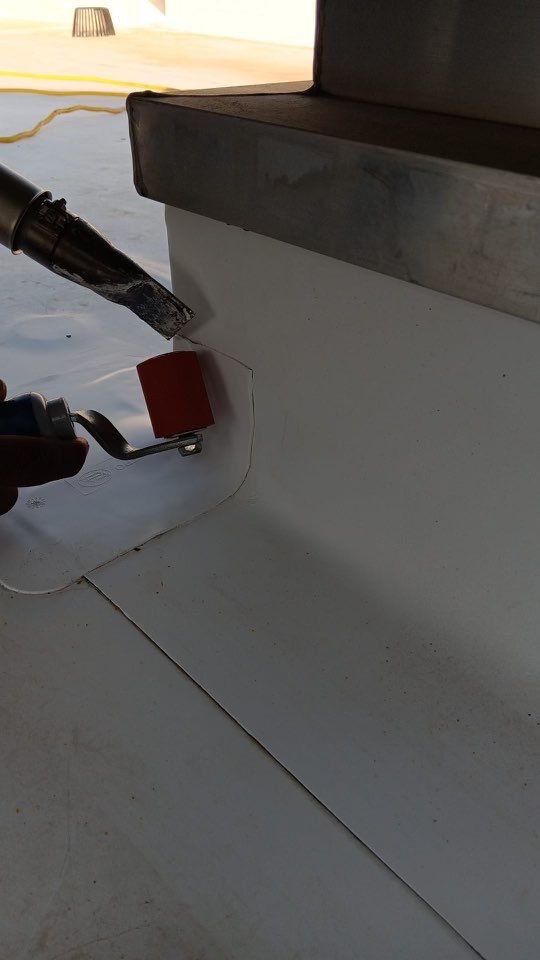
Unlike EPDM, which flexes with temperature changes and can stress glued seams over time, TPO does not experience substantial thermal movementBuilding Science - Thermal expansion is the movement of roofing materials as they expand when heated and contract when cooled. More. This stability helps prevent leaks at seams and makes TPO a popular replacement for aging EPDM roofs on most buildings.
What Is PVC in Commercial Roofing?
PVC, also known as polyvinyl chloride, is made from the same materials as household drainpipes. Like TPO membranes, PVC membranes can be installed using ballast, adhesives, or mechanical fasteners.
However, PVC offers a key advantage over TPO and EPDM: oils don’t degrade PVC. This makes it the standard choice for restaurants and other businesses that use or emit oils during manufacturing. In fact, PVC is often required by building code in areas where oil exposure is expected.
Because airborne oil droplets can travel, even buildings downwind of restaurants or industrial facilities may use PVC as a preventative measure against premature roof failure.
With all three systems used widely across commercial buildings, it’s important to understand how they compare in materials, price, and installation.
EPDM vs TPO vs PVC: Material Differences Compared
Material: EPDM
EPDM is a flexible, synthetic rubber membrane that’s typically adhered using adhesives or held in place with ballast. Its elasticity allows it to expand and contract with changing temperatures, which was previously considered advantageous, as the material bends rather than breaks under thermal stress.
That same movement can strain the seams, especially at the perimeter or around penetrationsComponent - A roof penetration is an opening where something passes through the roof surface, such as a plumbing pipe or an HVAC unit curb. More like rooftop HVAC units. Over time, repeated expansion and contraction can weaken the integrity of the adhesive and produce leaks. Because EPDM is usually installed in overlapping courses, each seam represents a potential vulnerability.
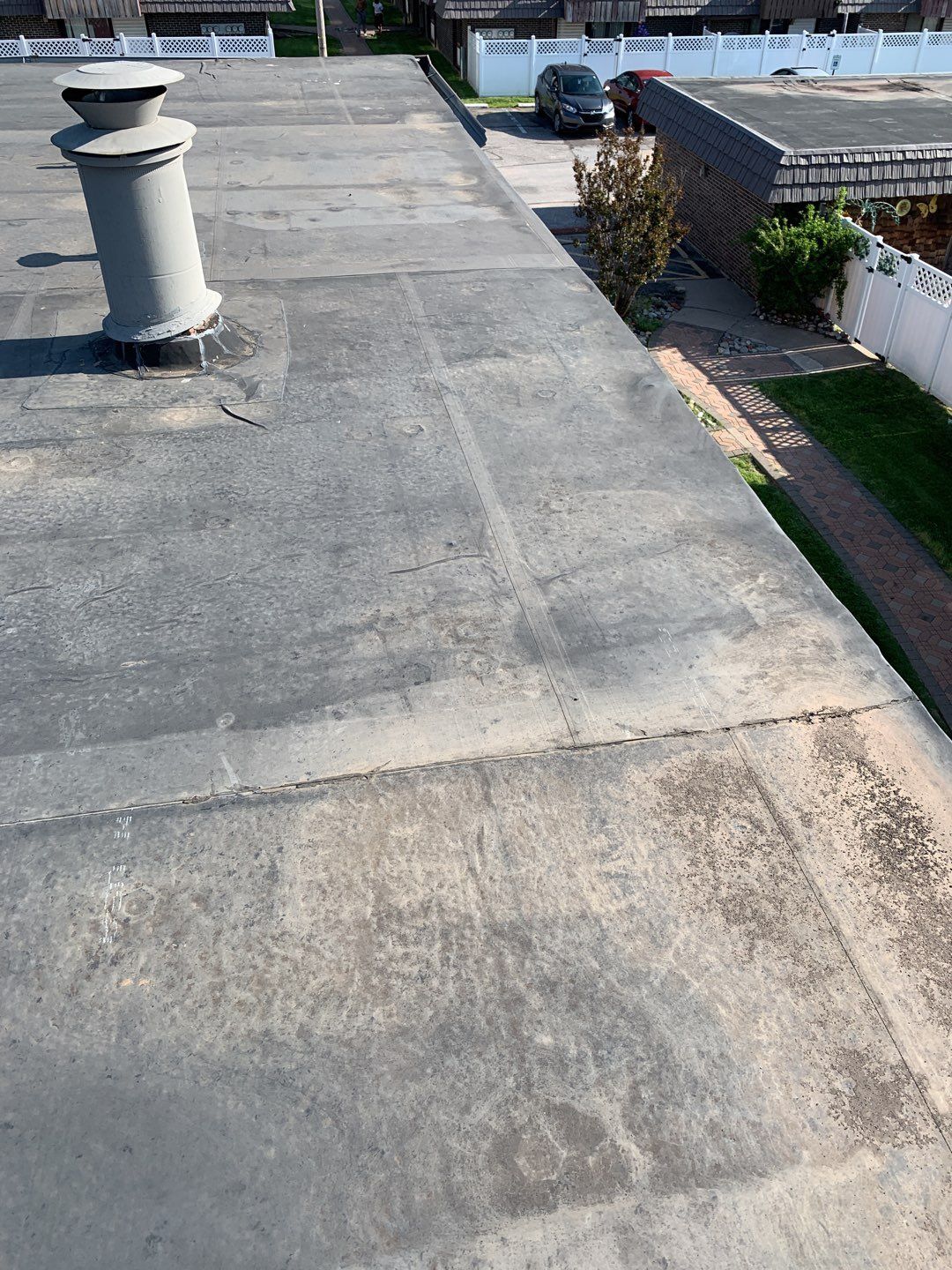 EPDM membranes are typically dark, resembling charcoal. This causes EPDM to absorb UV radiation. In colder climates, this can be beneficial, as retained warmth helps melt snow and ice, reducing accumulation and the need for snow guards. However, heat absorption also contributes to the membrane’s regular thermal movement.
EPDM adhesives degrade over time, even with proper maintenance. For this reason, EPDM systems often require periodic repairs at seams and transitions.
Material: TPO/PVC
TPO and PVC membranes are compatible with most standard installation methods, including mechanical attachment, adhesive, and ballasted systems. The chosen method typically depends on the project’s size, design, and climate considerations. Due to their durability and flexibility, both membranes perform well when mechanically attached, which is the most common installation method.
Fully adhered TPO and PVC membranes, which are secured using adhesives, are generally more resistant to water infiltration and wind upliftRoof Problems - Wind uplift is the upward force exerted on a roof system when wind over a building creates suction and pulls against the roof assembly. More than mechanically attached systems. However, because the membrane is bonded directly to the substrate, usually a cover board or rigid foam insulation, repairs can be more complex, sometimes requiring partial removal of the underlying material.
Both TPO and PVC act as UV radiation reflectors due to their composition and light color. As a result, these systems are often preferred in warm climates where minimizing absorbed UV radiation helps reduce energy bills. In contrast to EPDM, both TPO and PVC will cool a roof, so they are common in warm climates.
EPDM vs TPO vs PVC: Affordability Comparison
All three roof membranes have similar prices, depending on the project. An economy of scale is created using TPO and PVC low slope systems due to the speed of installation.
Although the membrane materials are similar in price, PVC roofing membrane often costs 5-10 percent more than TPO roofing membrane. The installation costs are identical, so consumables and labor will be the same for either system.
EPDM is a less expensive membrane, but the additional consumables and labor required tend to make EPDM installations 5-10 percent more expensive than either TPO or PVC on the same roof systemRoof Types - A roof system (roof assembly) is the entire series of roofing layers and components above the roof deck that work together to weatherproof the building. More.
Interestingly, although both TPO and PVC roofing membranes cost more than EPDM, the labor savings often make the total cost lower. Using mechanical attachment, TPO roofs can be installed year-round, while EPDM is subject to an operational temperature range.
If anything, TPO is easier to repair than EPDM because most TPO roof membranes are heat welded together. Heat welds leave no seams, so leaks are much less likely. Heat welds can be performed in any temperature, enabling repairs in any season.
Without maintenance, a TPO or PVC roof will outlast an EPDM roof. EPDM is subject to UV damage, so the wear and tear and constant flexing will fatigue the rubber, leading to a leak. All roof membranes benefit from regular maintenance, which can improve usable roof life by 50 percent, cutting the cost of ownership significantly.
EPDM vs TPO vs PVC: Installation Methods Compared
Installation: EPDM
EPDM roofs are usually fully adhered to the roof deck with contact cement, which is a slower process than mechanical attachment. EPDM roof systems can also be ballasted with gravel, which uses the weight of small stones to hold the membrane in place. EPDM roofs do not require full adhesion to the roof deck, but full adhesion prevents wind uplift in the event of a tear.
In most installations, adhesive is used to permanently bond the membrane to the roof deck, although the fumes can be a problem in a commercial setting. EPDM roof adhesives produce volatile organic compounds (VOCs) as the adhesive cures.
The VOC fumes emitted can be an irritant, so they should be taken into consideration when selecting a roof system. Generally, fully adhered roof membranes are avoided around entrances and exits (as well as other common areas) in consideration for the occupants.
Installation: TPO/PVC
Both TPO and PVC can be used anywhere a low slope roofRoof Types - Low-slope roofs (flat roofs) are a type of roof system with less than a 3:12 pitch, most commonly found on commercial and industrial buildings. More membrane is appropriate. In fact, the membrane can be attached using mechanical, adhered, heat welded, and ballasted installation methods on the same roof.
Neither TPO nor PVC roofing systems are affected by the ambient temperature, so they can be installed outside the temperature range of EPDM adhesives. Using the mechanically attached method, both TPO and PVC roofs will cost less to install than a EPDM roof of the same size.
Is TPO Better Than EPDM for Low Slope Roofs?
TPO roofing is better than EPDM when the roof must be installed in cold weather. TPO is also less expensive than EPDM when both material cost and labor are added together, especially on large roofs.
However, to match the durability of a single layer EPDM roof membrane, a TPO or PVC membrane may require a thicker membrane, such as 80mil instead of the standard 60mil. EPDM can tolerate small punctures better due to its elasticity, which helps it flex and seal around them more effectively than rigid membranes.
TPO can be used anywhere EPDM can be, so most commercial roof owners upgrade a EPDM roof to a TPO roof when feasible. TPO is as easily repaired as EPDM, so regular maintenance costs tend to be similar.
TPO can either replace an EPDM roof or cover it, depending on the project. If a low slope roof only has one EPDM roof on it a TPO roof can be installed over it, providing an additional substrate is added as well between the EPDM and the TPO.
If a commercial roof already has two membranes in place, they must be removed prior to any roof installation, including TPO. Building codes disallow more than two roof systems on the same structure because the framing is not designed to handle more weight than two roof layers. In these cases, the EPDM layer(s) are always removed.
Is PVC Better Than TPO for Low Slope Roofs?
PVC is superior to TPO in its resistance to chemical damage. TPO can be degraded by a number of airborne chemicals and oils, which land on a TPO roof and accumulate. PVC is much less vulnerable to chemical and oil damage than TPO, so PVC is common on public buildings like restaurants.
Can an EPDM Roof Be Replaced with TPO or PVC?
An EPDM roof can be replaced by or covered by either TPO or PVC. If the roofing system’s weight isn’t excessive, the EPDM offers a consistent substrate, and it’s in adequate condition, either TPO or PVC roofing membrane can be installed over an EPDM roof without removing it.
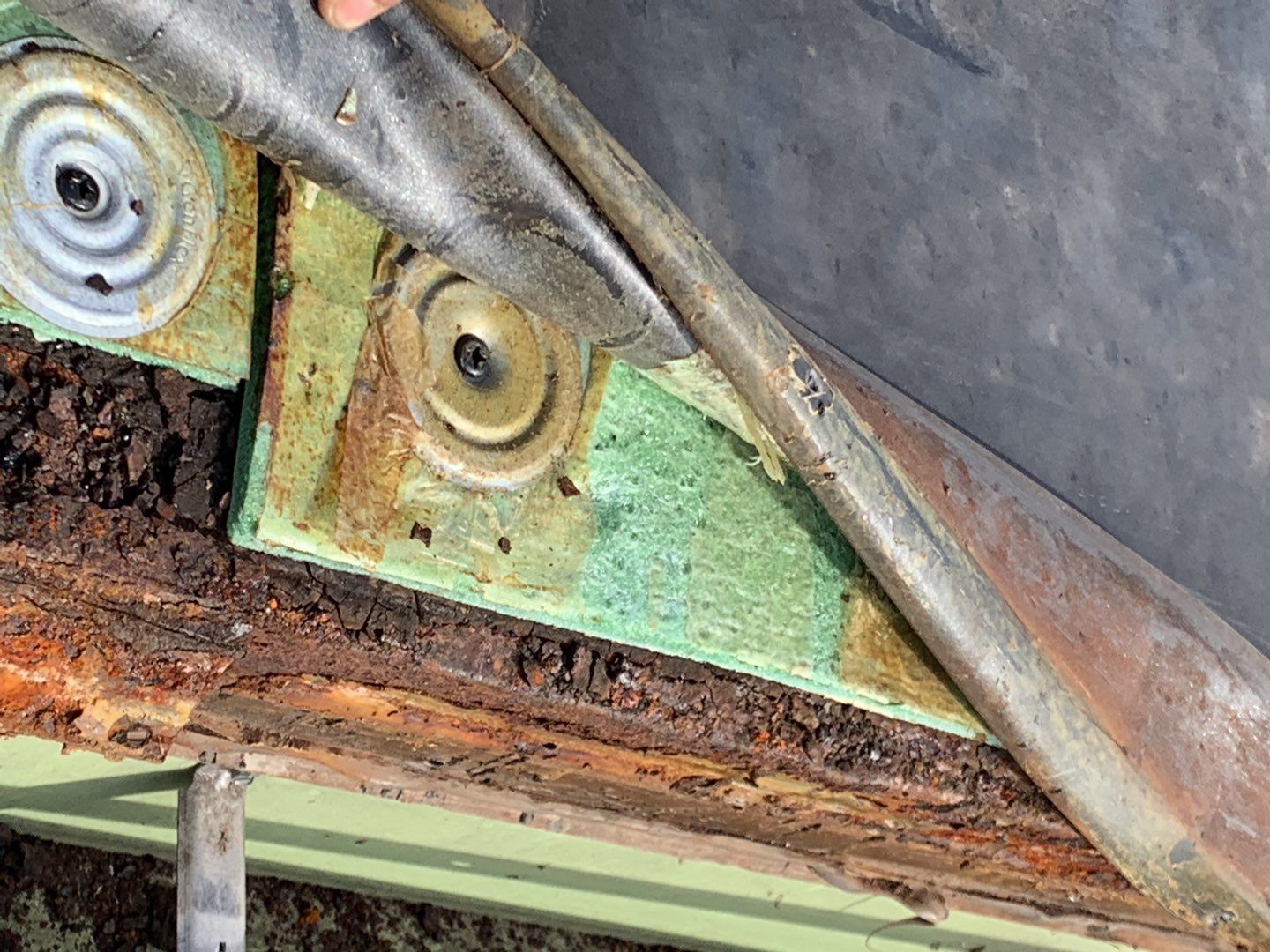
However, neither TPO nor PVC should be installed over a saturated roof as the membrane will trap the moisture and prevent evaporation.
Which Low Slope Roof Membrane Is Best for a Concrete Roof Deck?
You can use EPDM, TPO, or PVC on a concrete roof if the membrane is attached with adhesives, heat welded, or ballasted. Mechanical attachment is impractical on a concrete deck, so this method is extremely uncommon and expensive.
Can a Commercial Roof Be Ballasted if it Wasn’t Previously Ballasted?
You should not consider ballasting a roof that was previously adhered or mechanically attached without considering the added weight. Unless a roof framing system was specifically designed for a ballasted roofPerformance – Ballasted roofs use the weight of ballast to hold a roof membrane in place rather than adhesives or fasteners. More, do not add ballast until a structural engineer has inspected the framing and granted approval.
How Do I Replace an EPDM Roof With a TPO/PVC Roof?
EPDM is infinitely repairable, so many EPDM roofs are used far beyond their normal lifespan.
You may opt to just cover an old EPDM roof that has been repaired many times instead of removing it. The only preclusion to this is the existence of more than two membranes on a roof, which is prohibited by building code.
Those that lay over EPDM with a new system like TPO or PVC save the cost of demolition and disposal of the EPDM and benefit from a new roof. You can cover a single ply roof membrane with another if the original was attached with adhesive or mechanical fasteners.
Can All Low Slope Roof Membranes Be Coated?
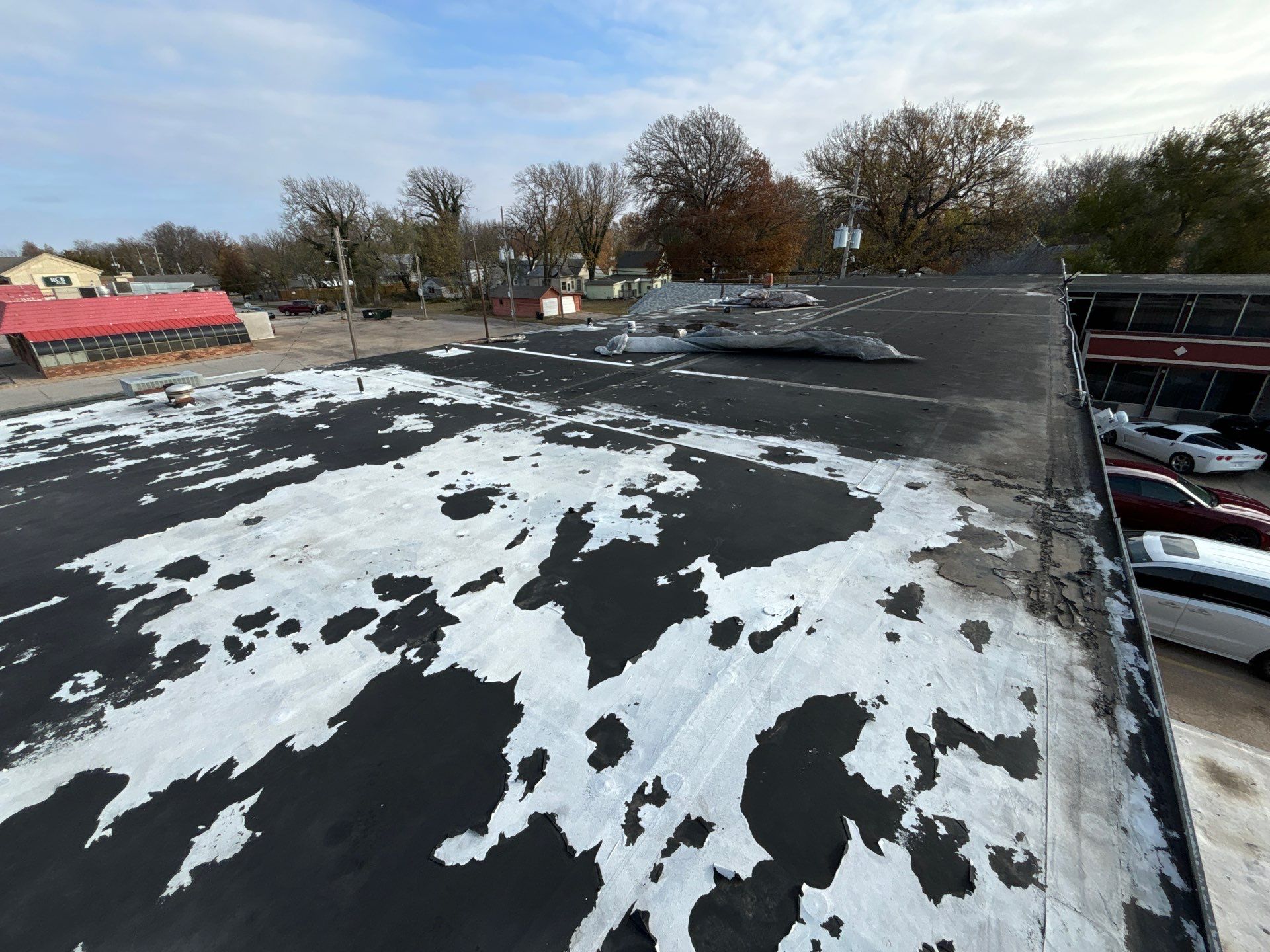
Technically, EPDM, TPO, and PVC roof membranes can be treated with protective coating to add durability and lifespan to the roof. These coatings can provide UV resistance, impact resistance, and puncture resistance in a single application.
However, because EPDM roofs flex, any hard coating will crack when the temperature causes the rubber to expand or contract. TPO and PVC roof membranes are more friendly to coatings as they will not flex and crack the finish and lead to underperformance of the coating.
We recommend a thorough inspection of your roofing system before committing to a coating. Coatings are only as successful as the roof beneath them, so a failing roof system will fail in spite of a coating.
Summary and Key Points
- EPDM is still a widely used product, and does have its advantages over TPO. In some instances, EPDM can withstand hail damage a little better. EPDM also holds up better against freeze/thaw cycles.
- TPO has quickly become the more popular single-ply membranePrimary Roof Covering - A single-ply membrane is a roof covering that uses one continuous layer of material to waterproof low-slope roofs. More among architects and contractors because of its easy, lower cost installation and high performance in the field.
- TPO will most likely always be the better choice of single-ply membranes. Always consider your location and performance requirements when choosing between TPO and EPDM, and always consult a trusted roofing contractor like Rhoden Roofing to help you make that important decision.
This article is part of our ‘Low Slope and Commercial Materials’ Series. Learn more about:
System Types and Surface Materials
-
- TPO vs EPDM
- TPO vs PVC
- Fleeceback vs. Standard Membranes for Low-Slope Roofs
- Mechanically Attached vs Fully Adhered Roofing Systems
- Black Roofs vs White Roofs
- Is a Metal Roof Right for My Commercial Property?
- Can a Commercial Roof Coating Save Me Money
- Flat Roof Coatings – What Are They and When Are They Appropriate?
- 3 Best Commercial Roofs in Wichita, KS
- What Is a Flute-fill Retrofit on a Commercial Metal Roof and When Does It Make Sense?
- Retrofit vs. Replacement: What’s the Best Option for Your Commercial Metal Roof?
- Fleeceback vs. Standard Membranes for Low-Slope Roofs
Substrate Systems
-
- Polyiso Insulation vs EPS Insulation
- What Do I Need to Know About Tapered Roofing Insulation Panels?
- What Is Cover Board and When Does it Make Sense to Include in a Low-Slope Roofing System?
- DensDeck vs Fiberboard: Which Cover Board Is Best for Low Slope Roofs?
- Commercial Roof Decking Guide: Comparing Wood, Metal, & Concrete for Low-Slope Roofs