
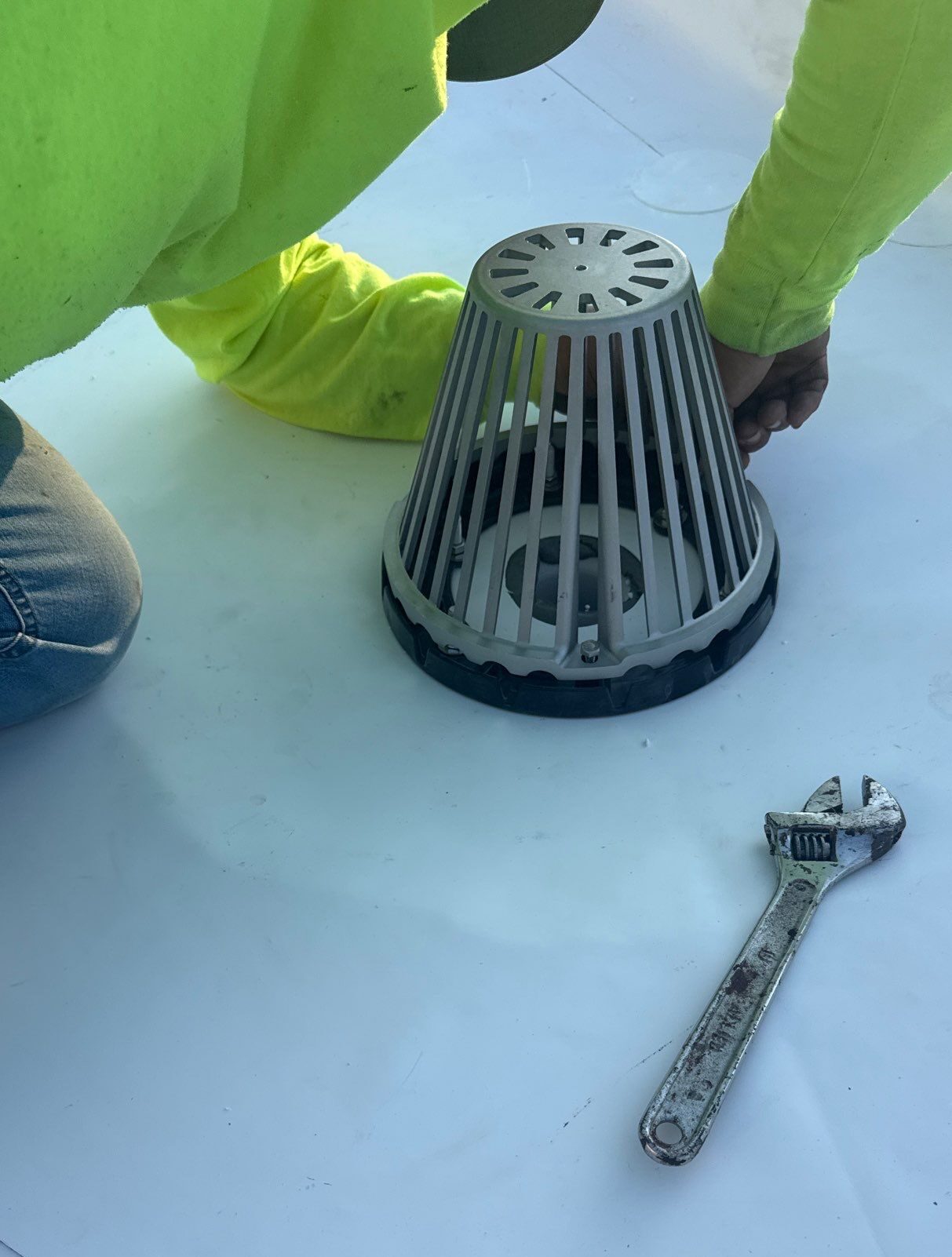
How do Internal Drains Work
Internal drains are placed on low points on low-slope roofsRoof Types - Low-slope roofs (flat roofs) are a type of roof system with less than a 3:12 pitch, most commonly found on commercial and industrial buildings. More where water is directed, often through structural slopePerformance - Structural slope is the intentional pitch built into a roof’s framing or deck to direct water toward drains or roof edges. More or tapered insulationComponent - Tapered insulation is insulation manufactured with varying thicknesses to create slope and direct water across a low-slope roof. More. They are commonly used on buildings with parapet wallsComponent - A parapet wall is the portion of an exterior wall that extends above the roofline at the perimeter of some buildings. More, where water does not often drain off the roof edge into gutters. Instead, the drain carries water down through interior piping to a storm system or designated outlet.
Because water enters the drainage system at the roof surface, internal drains rely on clear flow paths and routine maintenance to function. Leaves, dirt, and other debris can accumulate at the drain opening and restrict flow if not addressed.
When drainage is restricted, water can build up on the roof, increasing the risk of pondingRoof Problems - Ponding water is accumulated water that remains on a roof surface for more than 48 hours after rainfall. More and even roof collapse. For this reason, code often requires that internal drains are paired with overflow drains to prevent excessive water accumulation if the primary system cannot keep up.