
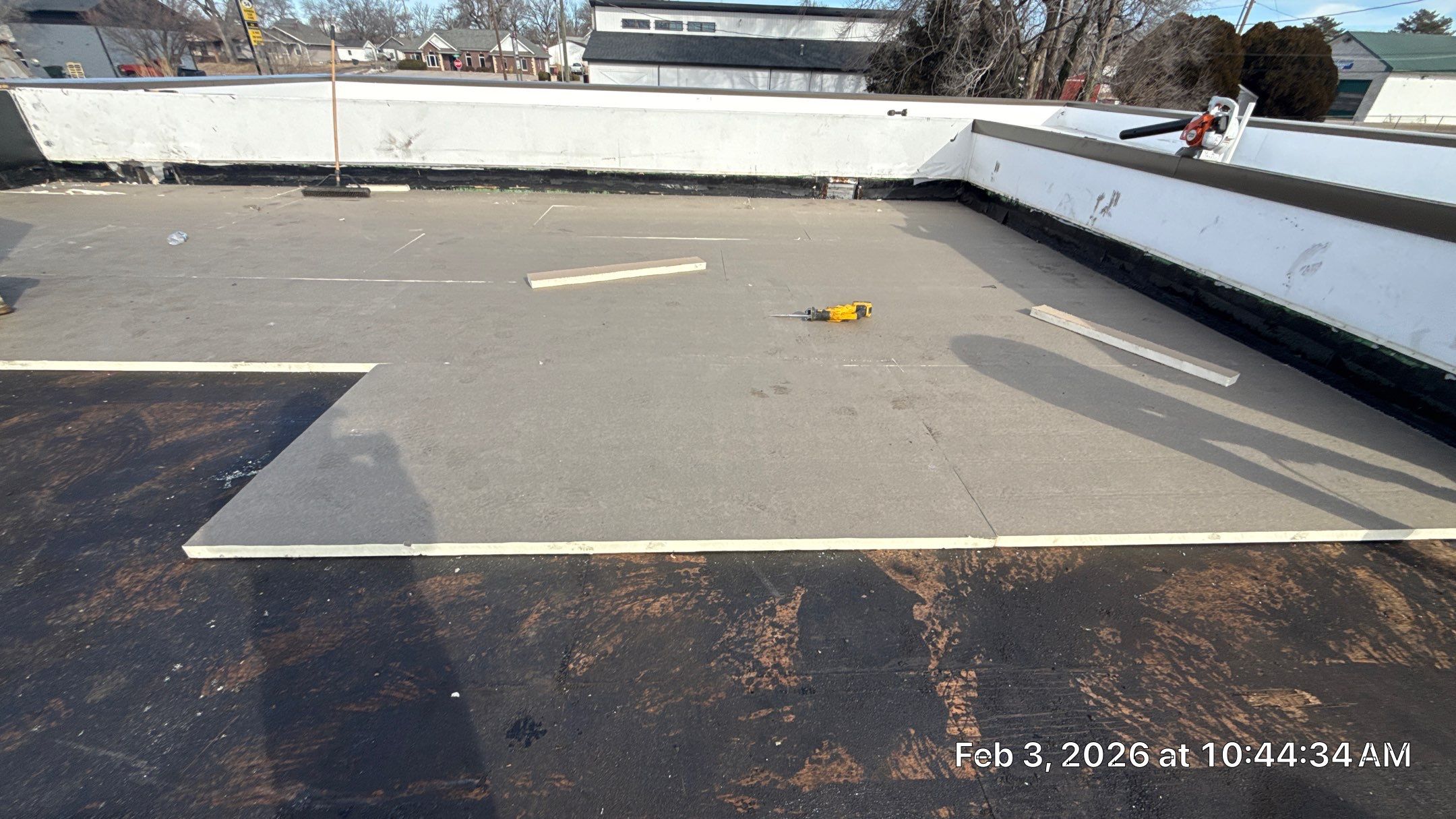
Why R-Value Matters in Roofing
R-value is most often referenced when discussing insulation in a roof systemRoof Types - A roof system (roof assembly) is the entire series of roofing layers and components above the roof deck that work together to weatherproof the building. More, especially on low-slope commercial roofs. Heat moves from warmer areas toward cooler areas, and insulation slows that movement. The higher the R-value, the more difficult it is for heat to pass through the roof assembly.
In roofing, R-value affects energy efficiency, occupant comfort and whether the roof system meets building code. A greater R-value usually requires more insulation, which can affect the roof’s surface height and drainage design.