
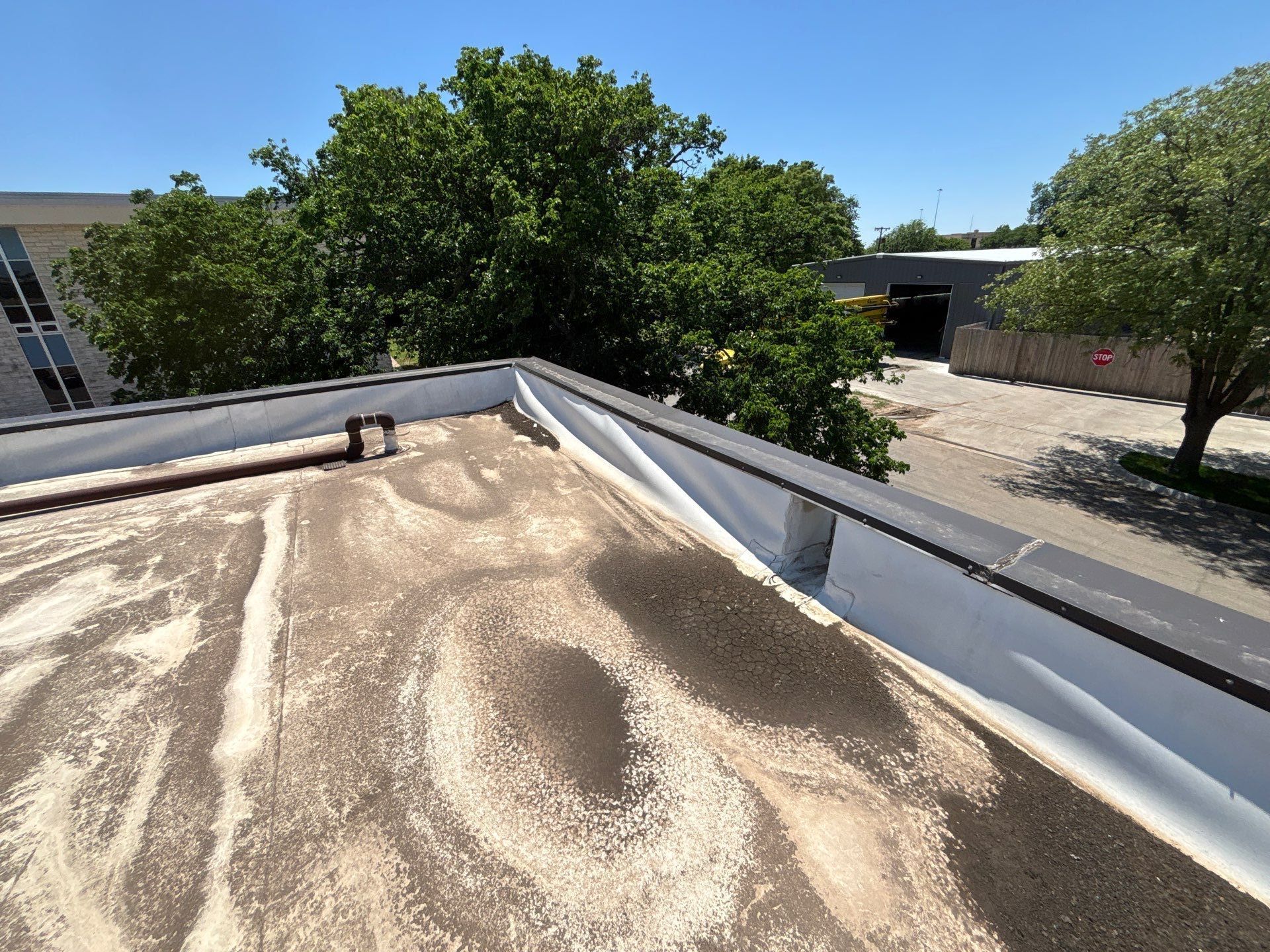
What Does Bridging Mean in Roofing?
Bridging is typically seen at roof-to-wall transitions on low-slope membranePrimary Roof Covering - A single-ply membrane is a roof covering that uses one continuous layer of material to waterproof low-slope roofs. More roofs, where the roofing material changes direction from horizontal to vertical. Instead of following the shape of the surface below it, the membrane stretches across the transition like fabric pulled too tight over a corner.
The term is usually encountered when reviewing warranty terms or replacement proposals where a contractor is explaining why base attachment like RUSS strips are important.