
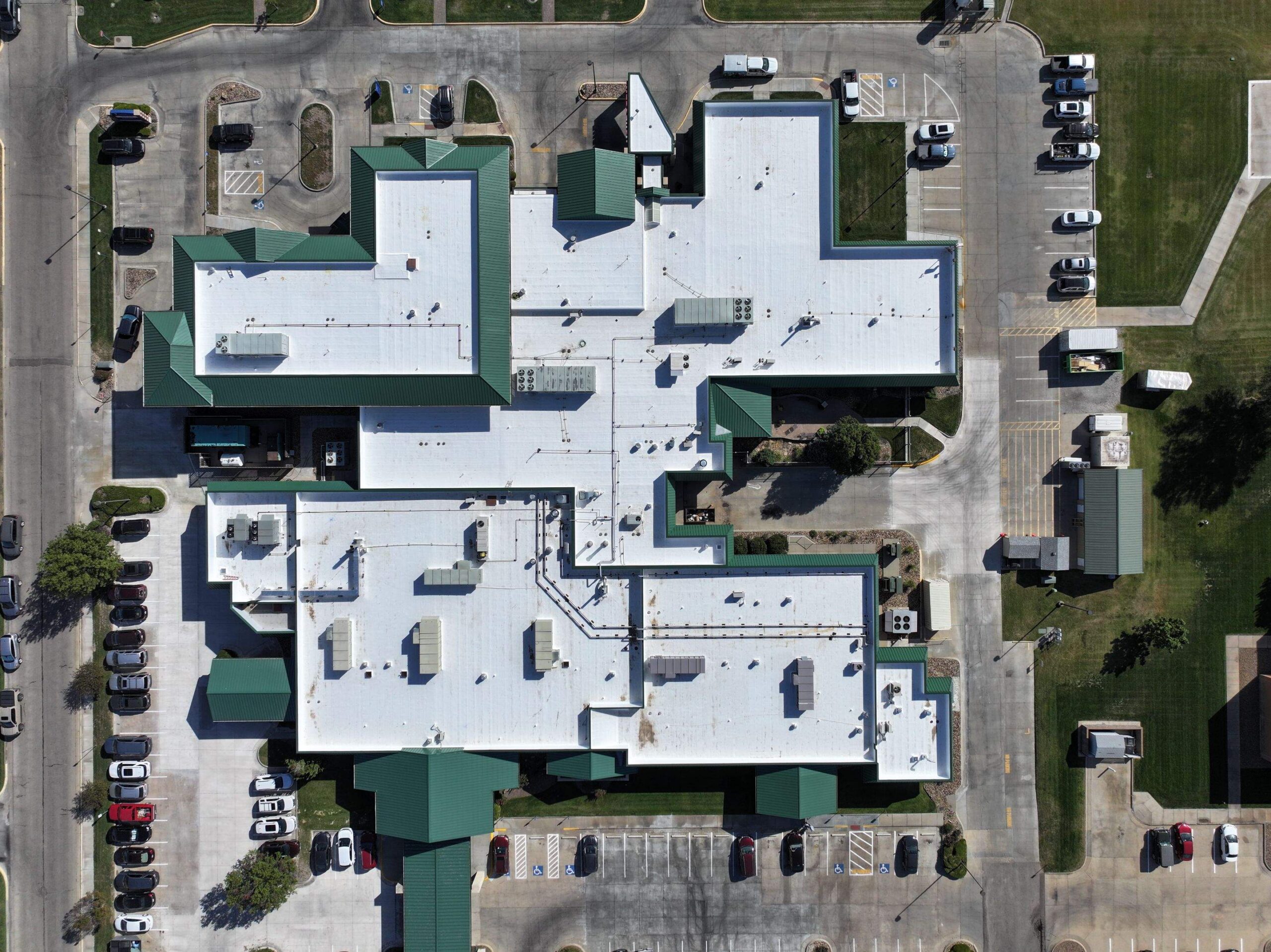
How TPO Roofs Work
TPO is one of the most common single-ply membranes used on commercial low-slope roofsRoof Types - Low-slope roofs (flat roofs) are a type of roof system with less than a 3:12 pitch, most commonly found on commercial and industrial buildings. More. It is manufactured in wide sheets that are installed across the roof and fused together at the seams rather than glue to form a continuous waterproof layer. The system relies on the integrity of these heat-welded seams to remain watertight.
TPO is available in 45-mil, 60-mil, and 80-mil thicknesses. Millage (mil) is the combined thickness of the membranePrimary Roof Covering - A single-ply membrane is a roof covering that uses one continuous layer of material to waterproof low-slope roofs. More and the scrimPrimary Roof Covering – Scrim is fabric reinforcement embedded inside a roof membrane to strengthen it against tearing, stretching and punctures. More behind it. Thicker membranes contain more material above that reinforcement layer, which, paired with certain attachment methods, can provide longer material warranties and have longer service lives.
Most TPO membranes are white, which reflects sunlight and reduces heat buildup rather than absorbing it.