
What Is Thermal Bridging in Roofing?
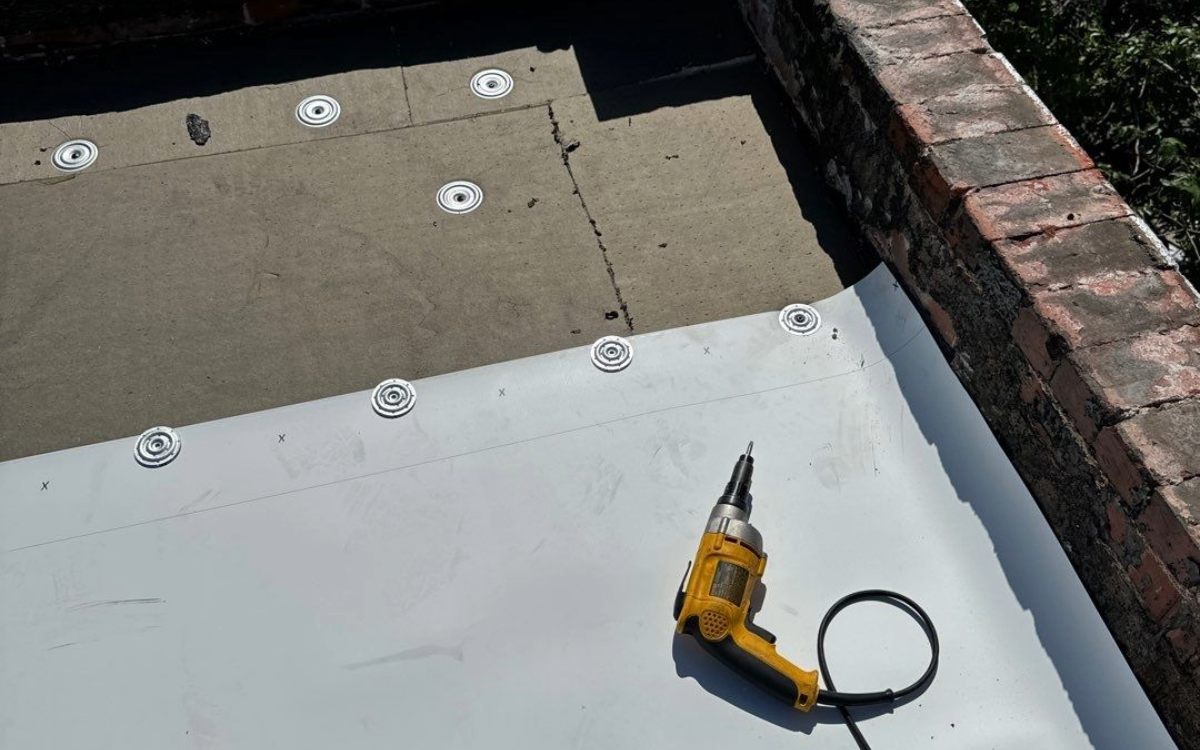
Thermal bridging is typically discussed with metal fasteners, roof curbs and other components that allow heat to bypass part of the insulated roof assembly. Heat naturally follows paths with less resistance, like water finding the fastest route downhill.
In commercial roofing, thermal bridging often becomes more important with stricter energy-code requirements, making it a common topic when property owners make energy-efficiency decisions.
Because materials like steel and metal fasteners carry heat much more easily than insulation, thermal bridges can create localized heat loss, cold spots or condensation within the roof systemRoof Types - A roof system (roof assembly) is the entire series of roofing layers and components above the roof deck that work together to weatherproof the building. More. Continuous insulation helps interrupt these conductive paths so heat does not have a direct path through the roof assembly.