Here’s something most homeowners don’t realize until it’s too late: Your roof’s pitch—the angle or slope of the roof—can significantly impact the success, cost, and performance of your entire roofing project.
It affects everything from:
- The materials you can use
- How your roof drainsComponent - An internal drain is a roof drain installed in the roof surface that collects water and directs it into piping inside the building. More rain or snow
- Whether your contractor can legally install the system you want
- And even how long your roof lasts
If you’re replacing or upgrading your roof and you don’t understand how pitch affects the project, you risk wasting money on the wrong materials—or worse, ending up with a roof that leaks or fails before it should.
At Rhoden Roofing LLC, we’ve helped thousands of Wichita homeowners avoid these costly mistakes. This guide is here to help you do the same—with clear, expert-backed advice that cuts through the noise.
Let’s dive in.
What You’ll Learn in This Guide:
- What roof pitch is (in plain English)
- Why it matters more than you think—especially in Kansas
- How do I calculate roof pitch on my own (with or without getting on a ladder)
- How to use roof pitch charts to choose the right material
- What to do before your next roofing project to avoid expensive errors
- How Rhoden Roofing ensures your pitch, materials, and project align—start to finish
Want expert eyes on your roof pitch, material compatibility, or long-term value? Schedule your free inspection with Rhoden Roofing.
What Is Roof Pitch—and Why Should You Care?
Let’s start with the basics.
Roof pitch is the steepness of your roof. It’s usually written as a ratio—for example, a 6:12 pitch means the roof rises 6 inches for every 12 inches of horizontal run.
Why Roof Pitch Isn’t Just a Technical Detail
The steeper a slide, the faster you’re sliding. A roof’s pitch is no different — it’s a performance factor that determines:
- How fast water and snow drain off your roof
- Which materials are safe—and allowed—for your slope
- How easy (or dangerous) it is for contractors to install and maintain
- What the labor, equipment, and total project cost will look like
How Steep Are Most Roofs?
Most pitched roofs have a slope in the 4:12 to 6:12 range. It’s steep enough to shed water efficiently while still being walkable.
If your pitch is flatter than 3:12, asphalt shingles are off the table. That’s not a recommendation—it’s building code. You’ll need a flat-roof system instead, like TPOPrimary Roof Covering - TPO (thermoplastic polyolefin) is a white roof covering used on flat (low slope) roofs, commonly installed on commercial buildings to create a continuous waterproof surface. More or PVCPrimary Roof Covering – PVC (polyvinyl chloride) is a heat-weldable single-ply roof membrane used on low-slope roofs, particularly on buildings where grease, oils, or other chemicals may contact the roof. More.
Why Roof Pitch Is Even More Important in Wichita
Let’s talk weather. Wichita isn’t mild. Your roof takes year-round punishment:
- Snowfall and freeze/thaw cycles
- Sudden hailstorms
- High winds
- UV exposure in 100+ degree summers
This environment amplifies the consequences of a poorly pitched roof. A roof that doesn’t drain properly is more likely to trap water, leak, or grow mold. Steeper roofs handle Kansas weather better—plain and simple.
That’s why understanding your slope is critical before choosing a roofing system. The wrong match can cause long-term problems, even if the roof “looks fine” at first.
What You Need to Know Before Starting a Roofing Project
Before you sign a contract or select materials, answer these three questions:
1. What’s the Current Pitch of Your Roof?
If you don’t know, you’re not alone. Most homeowners don’t. But this is where every roofing conversation should start.
We demonstrate how to calculate your roof’s pitch in this article. Or, you can schedule a free inspection and we’ll confirm it for you.
2. Is That Pitch Compatible With Your Preferred Roofing Material?
Each roofing product—shingles, metal, tile, TPO—has pitch requirements.
For example:
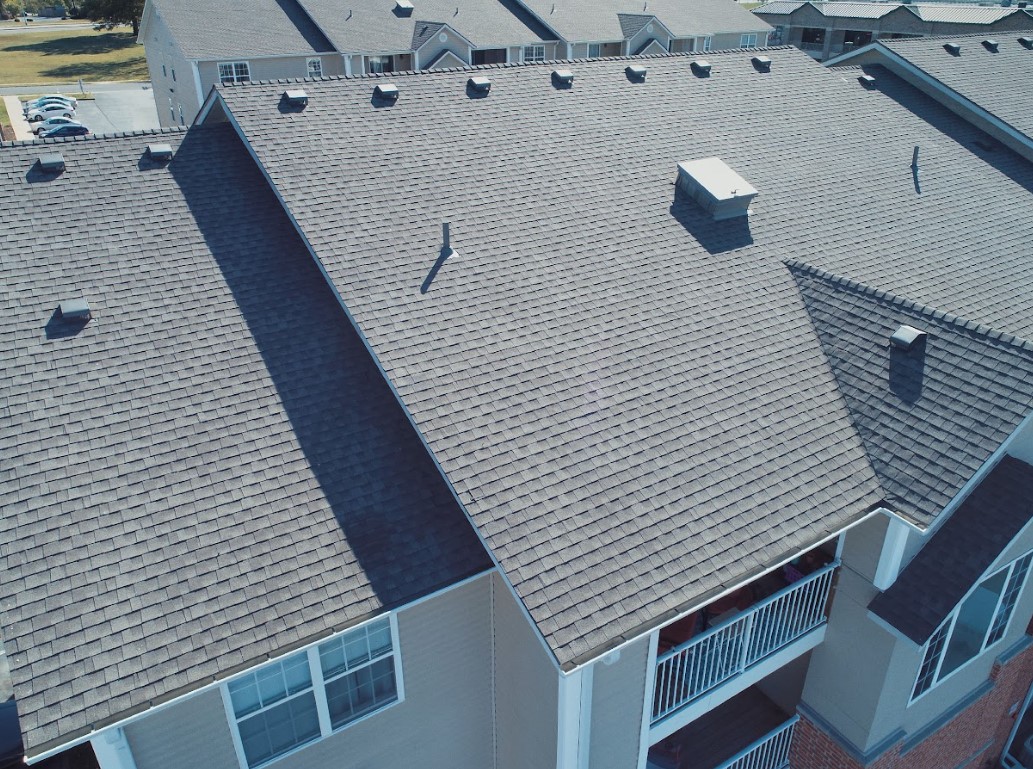
- Asphalt shingles need a slope of 3:12 or higher
- Tile and slate work best on 4:12 and up
- Membranes like TPO and PVC are ideal for low-slope or flat roofs
Matching the wrong product to your pitch can void warranties or lead to early failure.
3. How Will Pitch Affect Project Cost and Safety?
Steep slopes = more labor time, staging, and fall protection equipment. We breakdown what influences a roof’s cost in detail in another article, but below are a few key takeaways:
- Labor costs
- Installation time
- Roofing crew safety
Flat or low-slope roofsRoof Types - Low-slope roofs (flat roofs) are a type of roof system with less than a 3:12 pitch, most commonly found on commercial and industrial buildings. More, while easier to walk on, often require more expensive materials. Every pitch has trade-offs. Know them before you build.

Roof Pitch and Slope: Common Questions from Wichita Homeowners
If you’re planning a roof replacement or repair, you probably have a few questions about how roof pitch affects your home, materials, cost, and safety. Here are the answers we give most often to homeowners in the Wichita area.
What is a standard roof pitch in Wichita?
A standard roof pitch in Wichita is typically between 4:12 and 6:12. This range offers a strong balance of drainage performance, material compatibility, and affordability for most residential homes in Kansas.
Can I use shingles on a low-slope roof?
You cannot use shingles on a roof with a slope lower than 2:12. Building codes and manufacturer warranties require a minimum pitch for shingles to perform properly—below that, a membranePrimary Roof Covering - A single-ply membrane is a roof covering that uses one continuous layer of material to waterproof low-slope roofs. More roofing system is necessary.
Does roof pitch affect how long my roof lasts?
Yes, roof pitch directly affects how long your roof lasts. Steeper pitches help water and debris run off faster, reducing moisture buildup and extending the life of the roofing materials.
Can I increase my roof pitch during replacement?
You can technically increase your roof pitch during replacement, but it’s rare and expensive. Structural modifications are required, which often outweigh the benefits unless there’s a compelling reason to redesign your roofline.
How do I know what my roof pitch is?
You can determine your roof pitch by using a level and a tape measure in your attic, or by scheduling a professional inspection. Most homeowners find it easier and more accurate to have a contractor like Rhoden Roofing measure it during an on-site evaluation.
Final Takeaway: Understand Your Roof Pitch Before You Spend a Dime
Here’s the truth: You can’t afford to ignore pitch when planning your roofing project. It’s the foundation for material choice, performance, cost, and long-term protection.
At Rhoden Roofing LLC, we treat pitch as a strategic starting point—not an afterthought. Whether your roof is steep, flat, or somewhere in between, we’ll help you match it with the right materials, the right system, and the right strategy.
We’re licensed, insured, manufacturer-certified, and Wichita-tested.
Schedule your free inspection today and get clarity, not guesswork, on your roofing project.