What Are Balcony Structures and What Do They Do?
A balcony structure is an elevated, walkable surface built over an indoor (conditioned) living space and integrated into the home’s envelope. Imagine your bathroom tile is a roof covering: how could one make it waterproof? This is the unique challenge and characteristic of balcony structures. While they often have tile or pavers on top, this top layer conceals a waterproofing system beneath that functions like a low-slope roof.
Balconies typically include structural framing (wood or concrete), a sheathing layer, a waterproofing membrane (typically TPO), a drainage system, and a finished surface like tile, stone, or specialty decking. These assemblies are more complicated than standard decks or patios because they have to function both as occupied space and as a roof that keeps water out.
Why Balcony Structures Are So Difficult to Roof and Inspect
Balconies above living spaces introduce unique challenges because the waterproofing layer is buried beneath the walkable surface. That surface might be thick tile set in mortar, stone pavers on pedestals, or composite decking on sleepers—all of which prevent a visual inspection of the membrane below. If the system uses an internal drain, water invisibly travels beneath the surface to its outlet. As a result, small failures in the membrane go unnoticed until damage appears inside the home. Even then, pinpointing the exact source can be extremely difficult without removing portions of the surface. This leads to inspections that rely more on identifying symptoms than observable material failure.
Low-Slope Roofing on Residential Properties
On residential properties, low-slope roof sections often receive less oversight than they should. 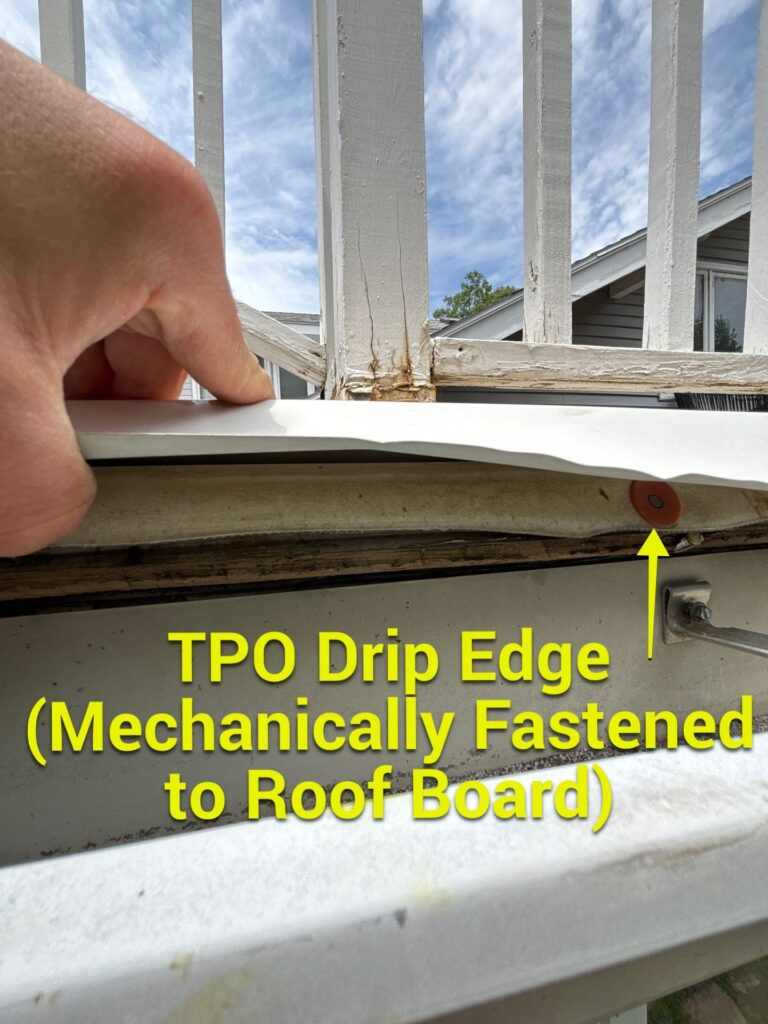
Unlike commercial projects where material warranties are standard, expected, and require a manufacturer inspection to verify proper installation, residential low-slope roofs are rarely inspected or registered for extensive warranty coverage. Homeowners may not realize that these roofs qualify for warranties at all. We often see low-slope sections of residential properties that use the incorrect materials and do not comply with manufacturer specifications.
Before replacing a low-slope section of your roof, ask your contractor about their experience with low-slope roof systems and ask about material warranties. A little research upfront will save money in the long run.
Note: Some balconies feature the waterproofing membrane as the top layer or a floating deck design. Where those design considerations overlap with finished surface balconies with tiles or pavers, they may be mentioned. However, this article focuses primarily on residential balcony structures with finished surfaces. For a detailed breakdown of failure points for low-slope membrane roof systems, see our Commercial Roof Failure series.
Expected Service Life of Balcony Structures
Balcony structures without exposed membranes can last anywhere from 20-40 years. The wide range reflects variations in design, climate, and construction quality. When the membrane is concealed beneath a finished surface, like tiles or pavers, it’s shielded from UV radiation and direct foot traffic, which can significantly extend its lifespan.
0–5 Years: New Installation – Evaluating for Correct Installation
Confirming that a balcony structure was installed correctly starts with proper slope. If slope and waterproofing aren’t solved before the top surface is installed, the entire assembly is a liability. Because the membrane is buried, early signs of poor workmanship usually appear as symptoms.
- Negative slope at the deck or insulation: This is the most important element for all low-slope roof systems, especially balcony structures. Pedestal-supported systems often appear flat because pedestals are placed at varying heights to flatten the top layer, while the deck or tapered insulation layer is sloped at least 1/4” toward the drainage system. Without positive drainage, water will migrate toward the door threshold and wall, where it produces interior leaks. If water remains pooled on the membrane’s surface more than 24 hours after rainfall, the balcony may have been framed flat or has low spots.
- Incorrect pedestal height: Pedestals feature a vertical rod with individual spacers that elevate the balcony’s surface. Once installed, it looks like a finished game of ring-toss. These spacers compensate for the slope below to create a flat walking surface on top, which does not need to be waterproof. However, if pedestals were leveled incorrectly and a small divot is created, those pavers or tiles will a) pond water, and b) be vulnerable to cracking where it’s not directly supported by the pedestal.
- Flashing laps and terminations: Balcony membranes must run up at least 6″ behind siding or stucco and integrate with door sill pans and wall flashings. If the membrane is short, any ponding water or even runoff is liable to enter the interior directly.
- No overflow drain: Most pedestal systems direct water to internal drains below the top surface using structural slope or tapered insulation. Those drains are likely to accrue debris over time. To allow proper drainage after this occurs, secondary (overflow) drains or through-wall scuppers are typically installed to handle runoff. Without a way of handling overflow, water will pond and eventually produce interior leaks.
- Poorly sealed penetrations: Posts that go through the membrane must be flashed properly, usually with pitch pans. Large gobs of surface sealant are not enough.
- Mechanically fastened or wrinkled membrane: Residential single-ply membranes are typically installed one of two ways: mechanical fastening (large fasteners with plates through the membrane’s seams) or fully adhered (heat-welding combined with adhesive to combine seams between rolls). Balconies with pavers or tiles require the membrane to be fully adhered. Mechanically fastened membranes are not reliably taut, which can produce wrinkles in the membrane once pedestals are installed. These wrinkles dam water, allowing it to pond and cause leaks.
- No mitigation for wind uplift: In high-exposure zones, pedestal systems may require pavers to either be notched so the pedestal can insert and secure the pedestal or locked down with a plate, like in this WAUSA wind uplift system. Failing to use one of these systems enables paver movement during high winds.
- Wrong material for edge metal: Residential balconies require different edge metals than sloped roofs. Steep-slope roofs use 1×2-inch or 2×2-inch drip edge at the eaves and rakes to protect the roof deck from water. Balconies using gutters to handle drainage require larger metal pieces, like 4×4-inch drip edge, counterflashing, or metal kickout flashing to prevent water from following the drip edge to the edge of the roof deck or overshooting the gutters entirely.
5–15 Years: Normal Weathering – What to Monitor
Over time, wear and environmental exposure begin to affect the assembly, though most degradation is hidden. These inspections primarily focus on secondary indicators of functional weathering and cosmetic changes.
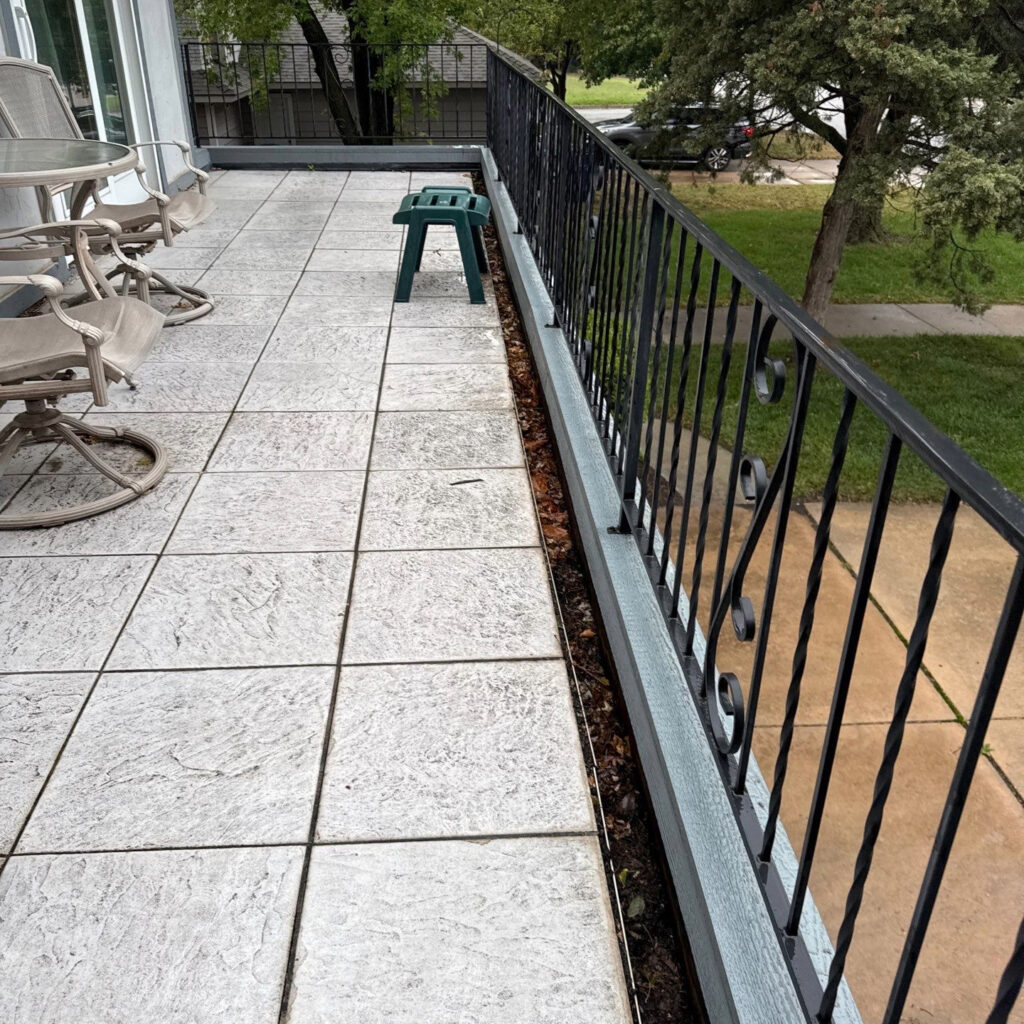
A tile balcony system gutters used for drainage. This balcony is level with steady pavers and is in good condition. The only maintenance required to ensure it continues performing well is gutter cleaning.
- Surface mold or algae: Persistent damp areas around pavers or between tiles may indicate water isn’t escaping as designed. While algal accumulation on the surface is typically a cosmetic issue, these areas may also become slick underfoot.
- Surface discoloration: UV radiation will cause minor color fading on tiles or exposed membrane systems, similar to sun bleaching on patio furniture. This is purely cosmetic. Efflorescence may also occur, which produces harmless white staining on the surface material, typically concrete or pavers; however, if widespread, it may be caused by chronic moisture issues below the surface.
- Debris accumulation in gutters: Balconies with box gutter systems accrue leaves, no different than standard residential gutters. Accumulated debris will cause water to permeate the fascia board or roof decking through capillary action.
- Debris accumulation near internal drains: Permeable pavers allow water to flow down to the membrane, where internal drains channel it off the roof. Leaves, seeds, and even nesting material can still accumulate at these drains. Pedestal systems with internal drains often allow pavers to be removed so that internal drains can be checked for debris.
Maintenance: Cleaning. We recommend cleaning all balcony drains and gutters at least once a year. Cleaning the paver or tile surface to remove algal growth will improve its appearance while minimally affecting its performance.
15-20 Years: Developing Signs of Aging – Proactive Care Recommendations
Balcony structures will begin to show signs of fatigue that require proactive care to prevent premature failure.
- Rocking or wobbling pavers: Pavers on pedestal systems may begin to wobble as pedestals shift or compress. This can allow water to concentrate at low points and increase the likelihood of cracks.
- Grout joint cracks: For tile systems, hairline cracks in grout often widen with thermal expansion. Moisture may then 1) migrate toward the membrane, or 2) freeze in the grout lines and cause cracks.
- Removal required for diagnosis: When the cause of acute symptoms or signs of aging cannot be identified, exploratory removal of tiles or pavers is often the only way to determine both the cause and extent of damage. This investigative step can be labor-intensive, expensive, and may require partial replacement or repair of layers.
Maintenance: Retighten or replace pedestals, reseal grout joints, or a core sample. The simplest of these repairs is resealing grout lines, which does not require the removal of the surface unless the issue is sourced to moisture retention. Unstable pedestals are likely to require repairs, although damaged pedestals may need repairs. If the cause of any sign of aging or damage cannot be identified, a core sample should be conducted. This extracts a sample of the membrane and substrate that can be directly inspected for moisture damage or delamination.
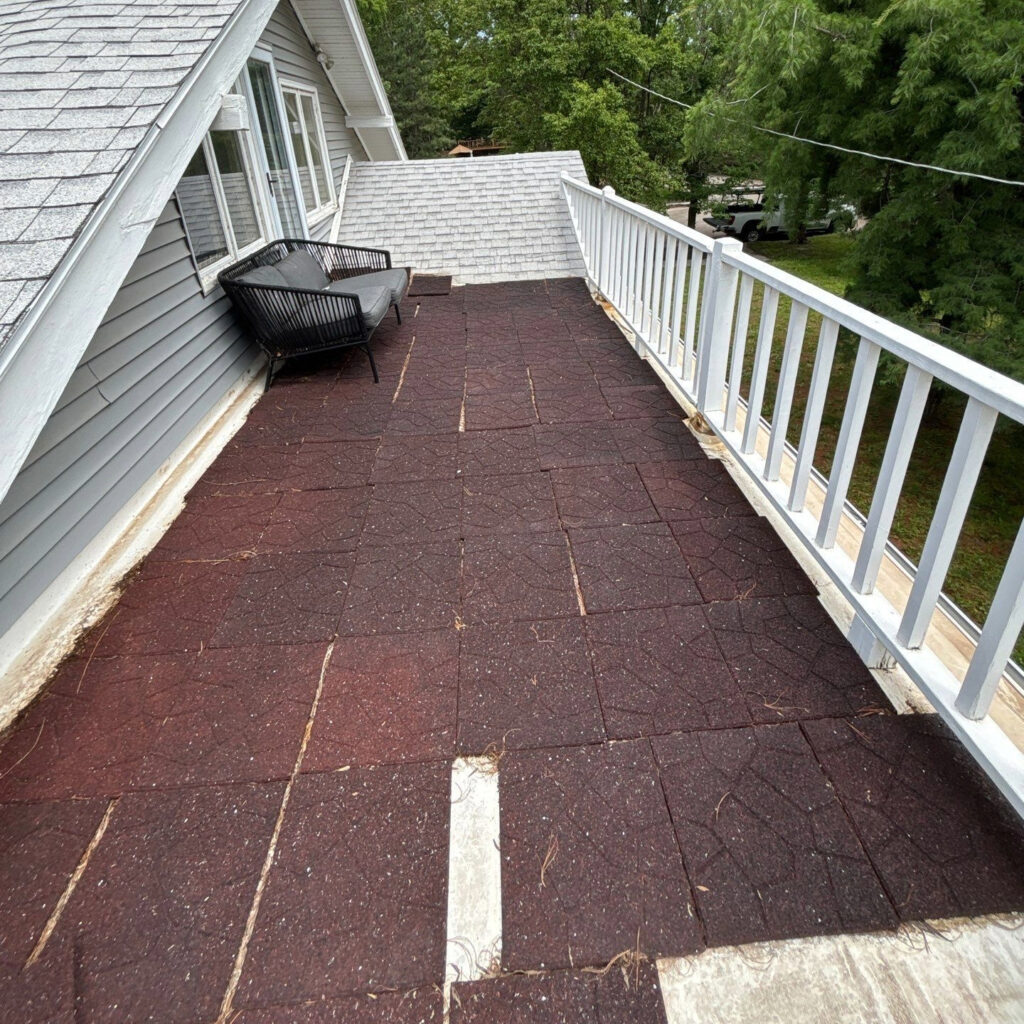
Rubber-based pavers were placed on this balcony structure by the homeowner. As you can see on the left side of the photo, the pavers were originally bright red. They became saturated as they interrupted water’s intended drainage path, creating dams between pavers that allowed water to pool. Many steep-slope practices were used to install the low-slope balcony system which – compounded by ponding water between pavers – resulted in severe interior leaks.
20–25+ Years: Failure & Replacement – Knowing When It’s Time
The functional life cycle of a roof component is determined by its ability to keep water out. The transition from normal aging to concerning wear isn’t always clear. To clarify what these thresholds are, we created an inspection checklist to standardize our recommendations, ensuring that suggested only when it’s necessary. Similar to how an insurance adjuster defines “totaled” on a car, we only recommend component replacement when the cost to replace a component or roof is less than the expected cost of damages over the next 12 months.
Balcony repairs are uniquely complex because the waterproofing layer is beneath the finished, walkable surface. To accurately determine whether repairs are needed, the top surface often needs removed. This added step means that even diagnostic work comes with costs, and repairs tend to be more invasive and expensive than replacing a standard component like a box vent, for example.
Based on our experience identifying and fixing roof leaks on over 13,000 homes and buildings, here are our criteria for when we recommend complete or partial replacement of a balcony waterproofing system.
- Water intrusion: Water staining, sagging ceilings, warped flooring, or mildew odors below the balcony that water has infiltrated the balcony. Once the substrate is saturated, it needs to be replaced.
- Loss of slope or persistent ponding: If the surface no longer drains or visible deflection has occurred, the surface will need to be removed to examine either the framing providing slope or the tapered insulation providing slope, along with the pedestal system, if applicable. Localized ponding that evaporates within 24-48 hours may still occur on well-installed, high-performing low-slope roof systems. A waterproof membrane can prevent water infiltration while the water evaporates. If ponding is widespread or lingers for greater than 48 hours, there is inadequate slope and the membrane is likely to allow water infiltration. This necessitates costly correction.
- Membrane tear or failure: If the waterproofing has been punctured or deteriorated beneath the surface (e.g., due to trapped moisture, poor securement, or incompatible materials), the substrate below may need replaced to prevent moisture from producing rot.
See Common Failure Points for Low Slope Commercial Roofs: Materials to learn more about membrane failure. - Deteriorated flashing: Failed door thresholds, post bases (often pitch pockets), or termination bars for exposed membrane systems need replaced. This manifests as corroded metal with active pitting rust, abrasive damage more than half the thickness of the flashing material, or broken pan seals for pitch pockets.
- Widespread effervescence: Recurrent efflorescence, especially combined with uneven drying patters after rain, is likely to indicate that moisture is lingering beneath the surface.
This article is part of our ‘Roof Component Inspection & Service Life’ Series. Learn more about:
Roof Covering
Flashing
Roof Vents
Roof Drainage