Unlike full tear-offs, commercial roof coatings are designed to restore the existing roof rather than replace it. Still, understanding how the coating application process affects tenants is critical before signing a contract.
A commercial roof coatingPrimary Roof Covering - A roof coating is a protective layer applied over an existing roof intended to extend its service life. More is usually less disruptive than a full roof replacement because it does not require large-scale tear-off, demolition, or removal of the existing roof systemRoof Types - A roof system (roof assembly) is the entire series of roofing layers and components above the roof deck that work together to weatherproof the building. More. However, “less disruptive” does not mean “invisible.”
In this article, we’ll explain what tenants are most likely to notice during a roof coating project, how long the work may take, what property owners should plan for, and how the right contractor can reduce disruption before it becomes a problem.
If you need a tenant-conscious plan tailored to your building, Rhoden Roofing LLC can help.
First: Is Your Roof Actually a Good Candidate for Coating?
Before discussing tenant disruption, it is important to clarify what this article is — and is not — assuming.
A roof coating can be a useful solution when the existing roof is still in serviceable condition. In most cases, coatings are used to extend the life of an aging but functional roof system. They are not a replacement for a roof that has already failed.
A coating may be appropriate if:
- The roof is structurally sound
- The existing roof system is dry
- The membranePrimary Roof Covering - A single-ply membrane is a roof covering that uses one continuous layer of material to waterproof low-slope roofs. More or metal panels are still in reasonably good condition
- Leaks are minor, isolated, and repairable before coating
- The roof surface can be properly cleaned, repaired, and prepared
- Drainage conditions are acceptable for the product being used
- The coating system is compatible with the existing roof surface
A coating is usually not the right solution if the roof has active widespread leaks, wet insulation, major drainage issues, structural concerns, serious membrane failure, failing flashings, or trapped moisture within the roof assembly.
A coating does not make a bad roof good. It adds a protective layer over the roof that already exists. If the existing roof is dry, stable, and properly prepared, that can be a useful way to defer a larger roofing project. If the existing roof is already failing, coating over it can trap problems inside the system.
For a broader explanation of when coatings make sense, start with our full guide: Flat Roof Coatings – What Are They and When Are They Appropriate?
This article assumes your roof has already been inspected, or that you are exploring a coating because it may be a legitimate fit. From there, the next question is procedural:
How much will the project affect the people inside the building?
What Should Property Owners Prepare Before a Commercial Roof Coating Project?
Even though this process is less invasive than a replacement, preparation is still essential to prevent tenant complaints and scheduling conflicts.
Tenant Communication Reduces Complaints and Scheduling Issues
Once eligibility is confirmed, communication becomes the next priority. Tenants should be informed about:
- Project start and end dates
- Potential temporary odors
- Minor daytime noise
- Access or parking adjustments
Clear communication early reduces complaints later.
Late Spring Through Early Fall Provides the Most Reliable Install Window
Timing matters. These systems require proper curing conditions. In Wichita, KS, late spring through early fall offers the most reliable installation window.
With preparation handled, the real concern becomes how tenants experience the project day-to-day.
How Disruptive Is a Roof Coating Compared to Replacement?
Now that we understand what the restoration process involves and how to prepare for it, let’s address tenant impact directly.
Most Roof Coating Projects Are Quiet Compared to Tear-Off Replacement
A roof coating is usually much quieter than a full roof replacement.
There is no large-scale removal of materials, nor are there large-scale machines moving materials. Most sound comes from:
- Pressure washing or surface cleaning
- Blowers used to dry and prepare the roof
- Foot traffic
- Equipment movement
Noise will be more concentrated around specific areas of the roof as the crew progresses. If the tenant has patient appointments, meetings, or other noise-sensitive groups, the contractor and property manager should plan around the most disruptive portions of the work before work begins.
A relatively quiet roofing project that tenants didn’t know about will still feel disruptive. Communication is essential when maintaining happy tenants.
See our tenant communication guide to learn more.
Odors Are Usually Temporary and Easier to Control Than Tenants Expect
Noise is only one part of the concern. Odor is often the bigger issue for office or medical tenants.
Some materials produce temporary smells during application that are not harmful. However, a smell that seems minor on the roof may feel more significant to a tenant inside a medical office, daycare, restaurant, salon, school, or office space. Below are a few factors that affect the coating’s odor:
- Whether the product is water-based, solvent-based, or low-VOC
- How close the work area is to HVAC units or air intake
- Wind direction
- Whether windows, doors, or vents are open or will regularly open
The contractor should identify all air intake and coordinate with the property manager how to protect tenants.
How Long Does a Commercial Roof Coating Take?
Duration is the next factor tenants care about.
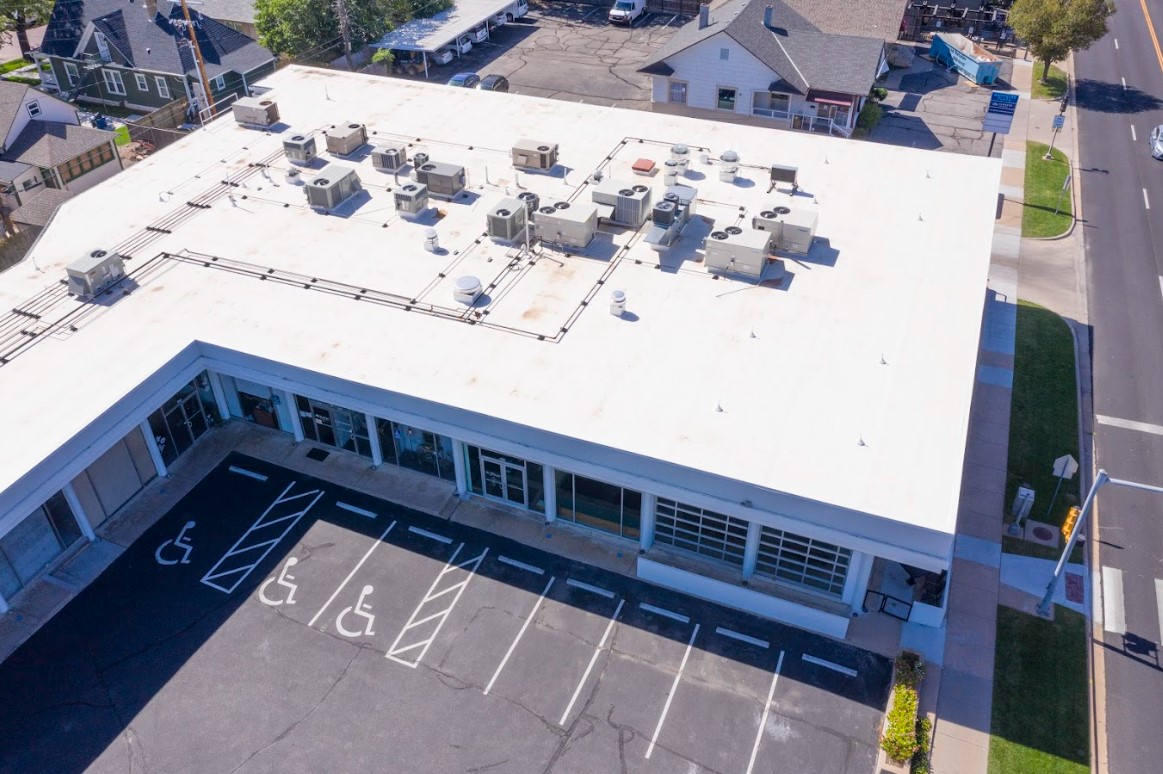
A 20,000 to 40,000 square foot building may require:
- 3 to 7 days
- Additional time if repairs are needed
However, schedule depends on more than square footage. Access, requisite repairs, weather and crew size all influence the project’s timeline.
A rushed coating project may negatively affect the coating’s cure time and result in a failed project. Most contractors provide a project timeline that allows for a few days of weather-related incidentals — under-promise, overdeliver.
Phased installation ensures that disruption is controlled and predictable.
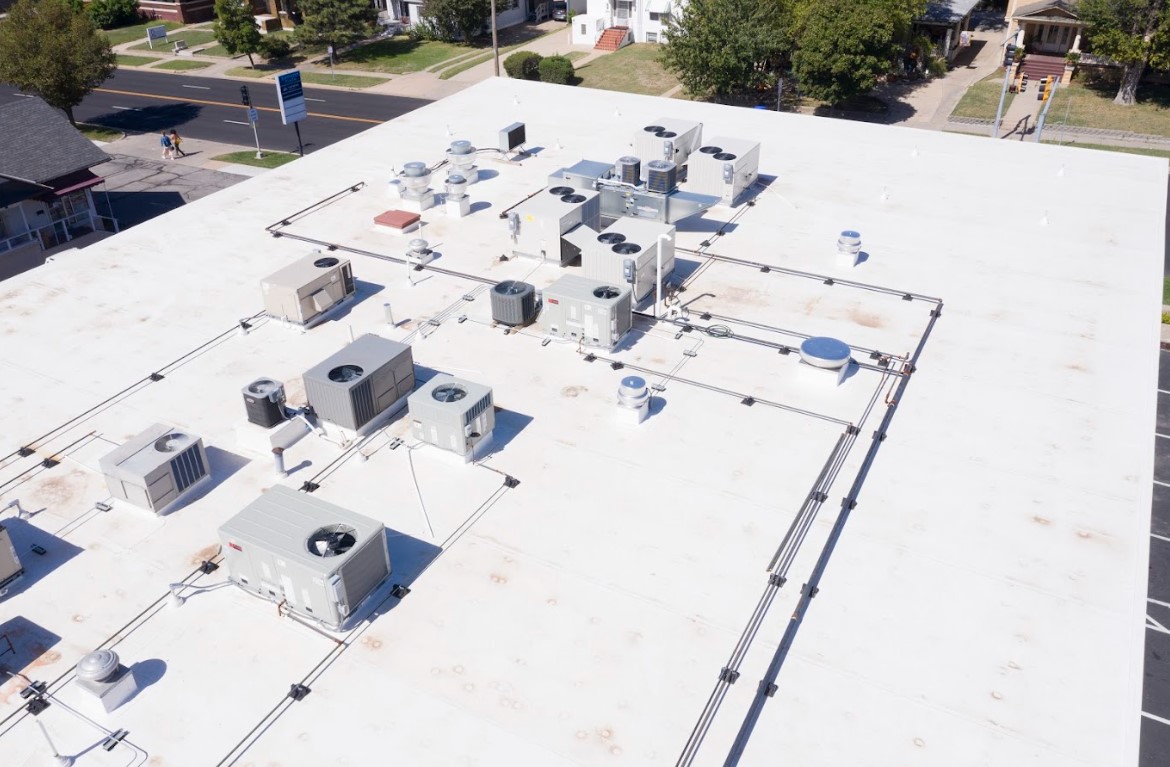
Do Tenants Need to Leave During a Coating Project?
Usually, no.
One of the advantages of coatings compared with many replacement projects is they do not require tenants to relocate or change their daily operations.
However, there are exceptions to this. A tenant may need to plan around the project if they operate:
- A medical office
- A daycare
- A restaurant
- A school
- A business with scheduled client meetings or events
Even then, the solution is not usually for tenants to leave. It’s deliberate planning and communication, such as working outside of business hours or protecting air intake.
How Can Disruption Be Minimized?
Ultimately, disruption is less about the materials themselves and more about how the project is managed.
Experienced contractors reduce tenant impact by:
- Working in controlled sections
- Scheduling loud preparation early
- Protecting HVAC intakes
- Providing clear communication schedules
When properly planned, restoration work should not require tenant relocation or operational shutdown.
With disruption addressed, it is also important to understand which systems perform best in this region.
What Types of Commercial Roof Coatings Are Used in Wichita, KS?
Material selection influences not only durability but also installation experience.
Silicone Coatings Are Common in Kansas for UV and Ponding Water Resistance
Silicone systems resist pondingRoof Problems - Ponding water is accumulated water that remains on a roof surface for more than 48 hours after rainfall. More water and UV damage. They are common on flat roofsRoof Types - Low-slope roofs (flat roofs) are a type of roof system with less than a 3:12 pitch, most commonly found on commercial and industrial buildings. More in Kansas due to rainfall cycles.
Acrylic Coatings Are Often Chosen for Reflectivity and Cooling Savings
Acrylic systems are highly reflective and reduce heat gain, making them attractive for energy savings.
Polyurethane Coatings Add Impact Resistance for Hail-Prone Areas
Polyurethane options provide added impact resistance, which can be beneficial in hail-prone areas.
Each system carries different curing characteristics and odor levels. That is why experienced commercial roof coating contractors evaluate both building use and tenant sensitivity before recommending a system.
Now let’s look at the broader pros and cons.
What Are the Pros and Cons of a Commercial Roof Coating?
Understanding the trade-offs helps property owners make informed decisions.
Pros
- Lower cost than replacement
- Minimal demolition
- Faster project timelines
- Improved energy efficiency
- Cost-deferring
Cons
- Not suitable for roofs with damaged substrate
- Weather-sensitive installation
- Requires proper surface preparation
When correctly applied, a coating can extend service life by 5 to 10 years depending on thickness and system type.
Even with these advantages, property owners still have practical questions. Let’s address those directly.
What Do Wichita, KS Property Owners Ask About Tenant Disruption?
Now that we’ve covered noise, odors, materials, and scheduling, here are the most common tenant-disruption questions commercial property owners ask before moving forward with restoration work.
How disruptive is this type of restoration project?
This type of restoration project is minimally disruptive compared to full replacement. Because there is no tear-off or large-scale demolition, most work remains confined to the roof surface with limited interior impact.
Will tenants notice strong odors during installation?
Tenants may notice temporary odors during application, but modern low-VOC materials significantly reduce indoor impact. Proper ventilation planning and scheduling outside peak hours further minimize disruption.
Can businesses stay open during installation?
Businesses can remain open during installation in most cases. Work is phased across sections of the building, allowing operations to continue without shutdown.
How long does the system typically last in Wichita, KS?
These systems typically last 10 to 20 years in Wichita, KS depending on thickness, material type, and ongoing maintenance. Regular inspections help maximize performance.
Does hail damage prevent restoration?
Hail damage does not automatically prevent restoration, but the existing membrane must remain structurally sound. Minor impact damage can often be repaired before application.
How do I know if my building qualifies?
Qualification requires a professional inspection to confirm the existing roof is dry and stable. If those conditions are met, restoration is often a cost-effective alternative to replacement.
Is a Commercial Roof Coating the Right Low-Disruption Solution?
A commercial roof coating does not have to mean tenant disruption. Compared to full replacement, restoration systems are quieter, faster, and less invasive.
With proper planning, clear communication, and experienced commercial roof coating contractors, most buildings remain fully operational during installation.
If you are evaluating options in Wichita, KS and want clear answers about noise, smells, and scheduling, Rhoden Roofing LLC brings certified expertise and tenant-focused project planning.
Schedule your free inspection today.