
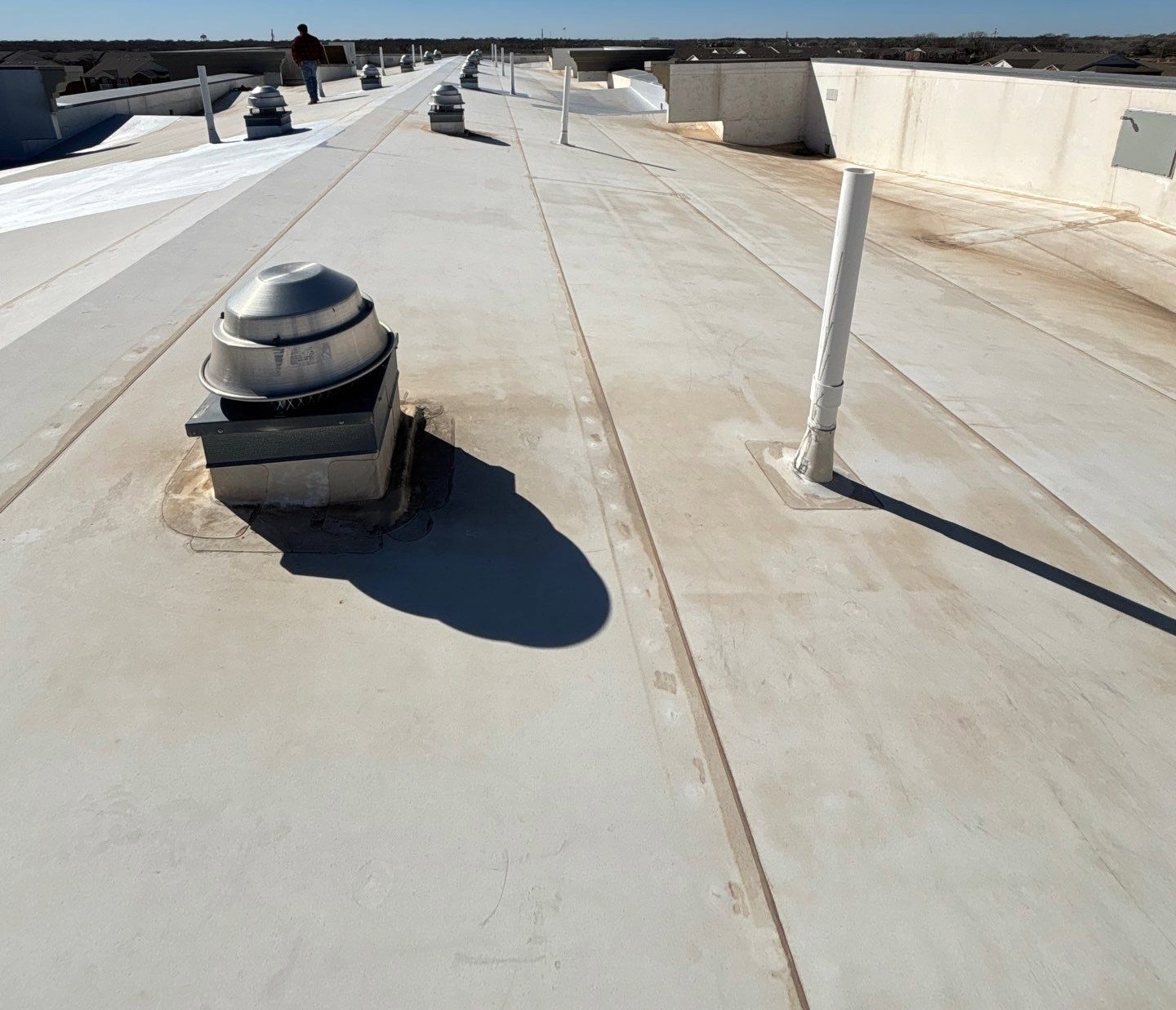
Why Structural Slope Matters on Low-Slope Roofs
Structural slope is often discussed during roof inspections, drainage diagnostics, or replacement planning. Low-slope roofsRoof Types - Low-slope roofs (flat roofs) are a type of roof system with less than a 3:12 pitch, most commonly found on commercial and industrial buildings. More are not flat; they are designed with a minimum pitch of ¼ inch per foot to move water off the roof. Structural slope creates that pitch through the building’s framing or deck itself rather than tapered insulation installed above it.
This distinction becomes important during roof replacements and when troubleshooting drainage issues. If structural slope is present, drainage is built into the structure. If it is absent or inadequate, water can collect in low areas, increasing the risk of pondingPerformance - Ponding water is accumulated water that remains on a roof surface for more than 48 hours after rainfall. More. In those cases, tapered insulation is used to introduce slope above the deck.