
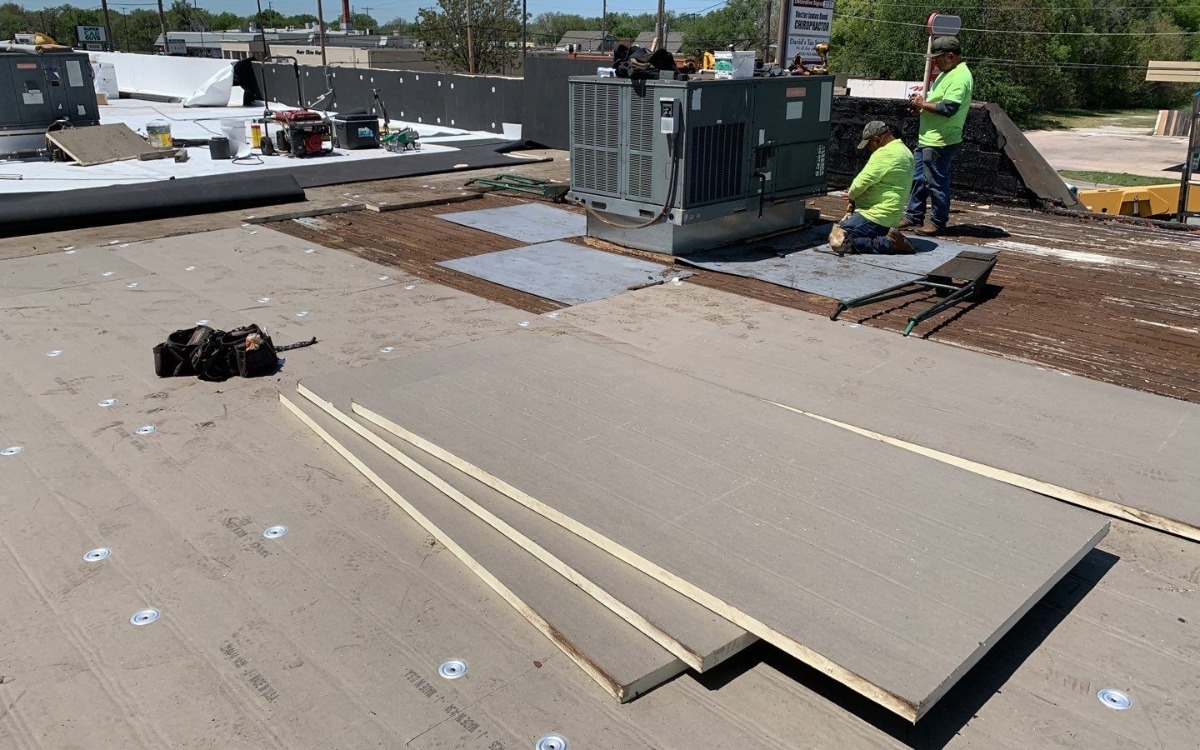
Why Is Polyiso Insulation Used in Roofing?
Polyiso is the most common insulation used in modern low-slope roofRoof Types - Low-slope roofs (flat roofs) are a type of roof system with less than a 3:12 pitch, most commonly found on commercial and industrial buildings. More systems because it provides more R-value per inch than alternatives like EPS. As one of three primary layers in a commercial roof systemRoof Types - A roof system (roof assembly) is the entire series of roofing layers and components above the roof deck that work together to weatherproof the building. More, it is frequently discussed when evaluating roof replacement options and energy efficiency requirements.
The thickness of Polyiso influences how effectively the roof resists heat flow. Because Polyiso delivers substantial thermal resistance per inch, it is often used to meet modern energy code requirements.
Polyiso can also be manufactured as tapered insulationComponent - Tapered insulation is insulation manufactured with varying thicknesses to create slope and direct water across a low-slope roof. More. As such, it does more than regulate temperature: it becomes part of the roof’s drainage system by creating slope that moves water toward drains, scuppers and gutters.