
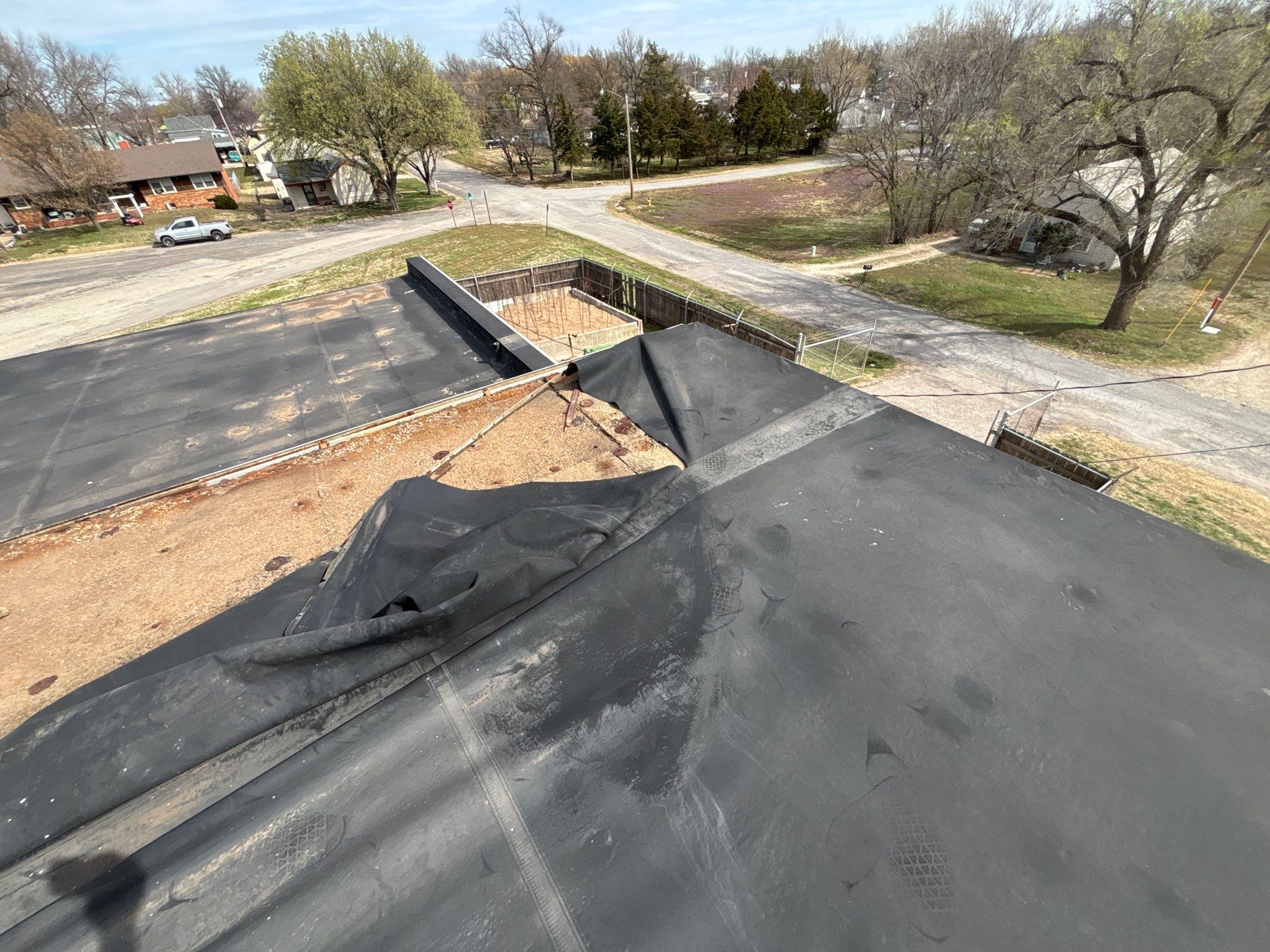
How Wind Uplift Affects Roof Systems
Wind uplift occurs when fast-moving air traveling over a roof reduces pressure right above the surface, creating suction that lifts the roof systemRoof Types - A roof system (roof assembly) is the entire series of roofing layers and components above the roof deck that work together to weatherproof the building. More away from the structure. These forces are typically strongest at roof edges and corners. For low-slope roofRoof Types - Low-slope roofs (flat roofs) are a type of roof system with less than a 3:12 pitch, most commonly found on commercial and industrial buildings. More systems, this is why more fasteners are used in those areas than in the center (field) of the roof. For steep-slope roof systems, this is why a starter course is installed at the roof’s perimeter.
Roofs on taller structures experience higher wind speeds because the ground is not there to slow the wind down through surface friction.
To resist the effects of wind uplift, roof systems use fasteners, adhesives, and edge securement. Manufacturers assign wind ratings based on how well the roof assembly, not just the membranePrimary Roof Covering - A single-ply membrane is a roof covering that uses one continuous layer of material to waterproof low-slope roofs. More or shingles, resist these uplift forces. Higher wind ratings often require additional fasteners and reinforced perimeter details.