Numerous times I have been on a roof chasing down a leak and have no idea where to start. An honest roofing contractor will admit that some leaks have been extremely difficult to locate, requiring multiple trips to determine the source. In this blog post I will explain why we are using thermal imaging technology to locate these hard to find leaks.
How does thermal imaging work?
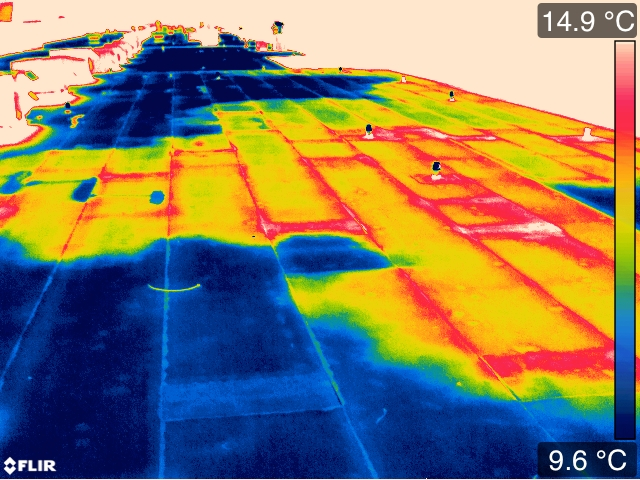
A thermal imaging camera is essentially a heat sensor that is capable of detecting tiny differences in temperature. The camera collects the infrared radiation from objects in the scene and creates an electronic image based on information about the temperature differences. The picture above is an example of moisture intrusion on a flat roofRoof Types - Low-slope roofs (flat roofs) are a type of roof system with less than a 3:12 pitch, most commonly found on commercial and industrial buildings. More. The dark area (black area) detected is moisture underneath the roof membraneMaterial - A single-ply membrane is a roof covering that uses one continuous layer of material to waterproof low-slope roofs. More.
When water gets caught in a roofing system, we count on the sun to help us detect it. The sun heats up the roof, but the water heats more slowly that the dry roofing material. The water also cools off slower than the roof, so we can check it at night.
The thermal imaging camera is a great asset and tool for our business. We have been able to pin down hard to find leaks with the use of this camera. At Rhoden Roofing, we incorporate our thermal technology in our RoofCare maintenance program, to get the most information to our customers.