
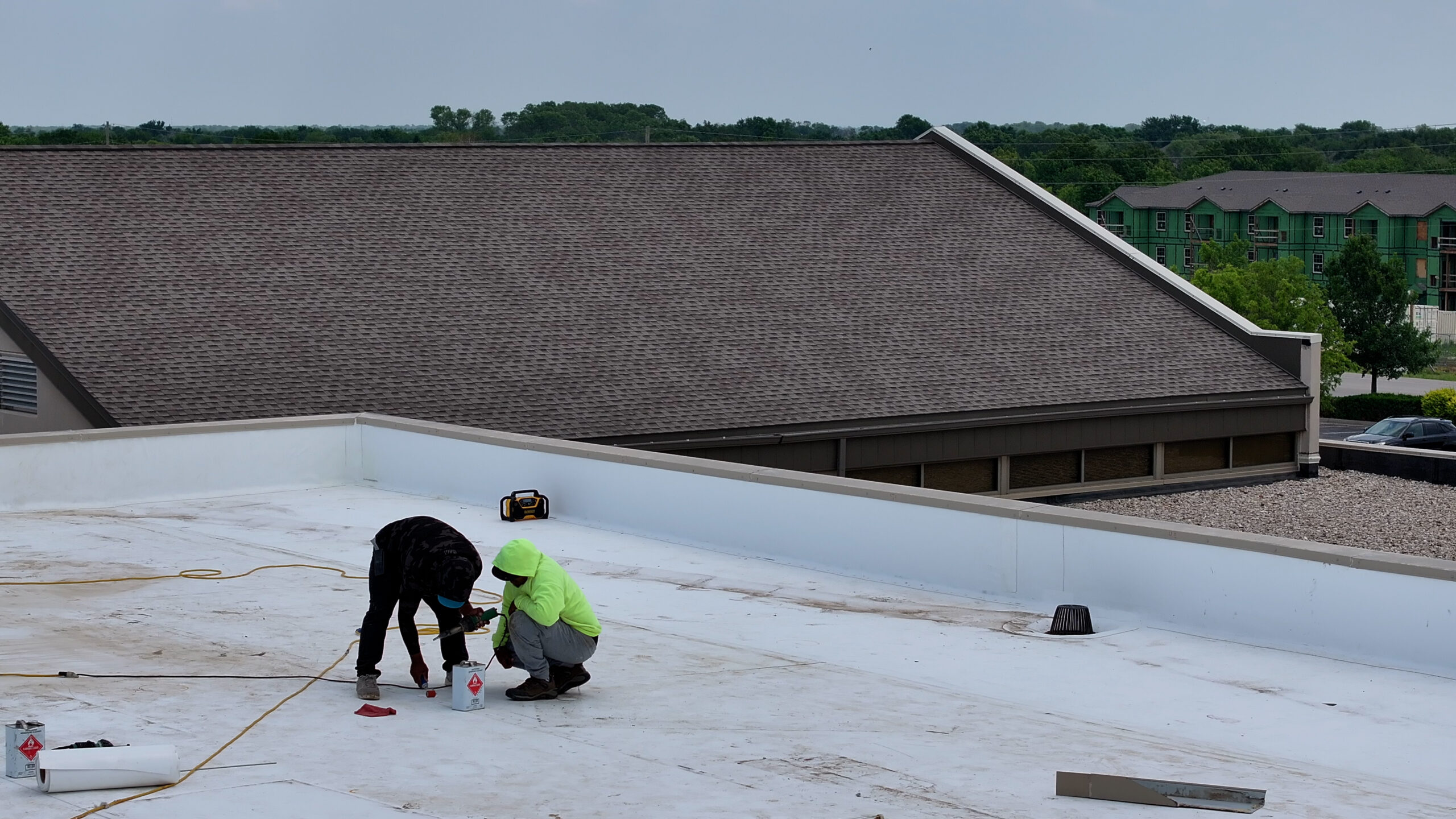
How a Roof System Works
A roof system is built in layers, with each serving a specific role.
At the base of a roof system is the roof deckComponents - A roof deck is the structural surface connected to a building’s framing that supports the roof system installed above it. More, which provides structural support. Above the deck is a secondary layer, such as underlayment on steep-slope roofs or insulation on low-slope roofsRoof Types - Low-slope roofs (flat roofs) are a type of roof system with less than a 3:12 pitch, most commonly found on commercial and industrial buildings. More, followed by the outer covering that protects the building from weather. Components such as flashing, fasteners, and edge metal are integrated throughout these layers to complete the system.
The term “roof system” is used because these layers and components are designed to function together rather than independently. Shingles, membranes, insulation and flashing each have a specific role, but the performance of the roof depends on how well they work in combination.
When decisions are made about repairs, replacement, or warranties, the condition of the roof system is considered – not just the surface. Even if the top layer passes inspection, a saturated secondary layer may mean the roof system has failed.
When a contractor talks about a “roof system,” they are talking about how the whole roof works together, not just the part you can see.