
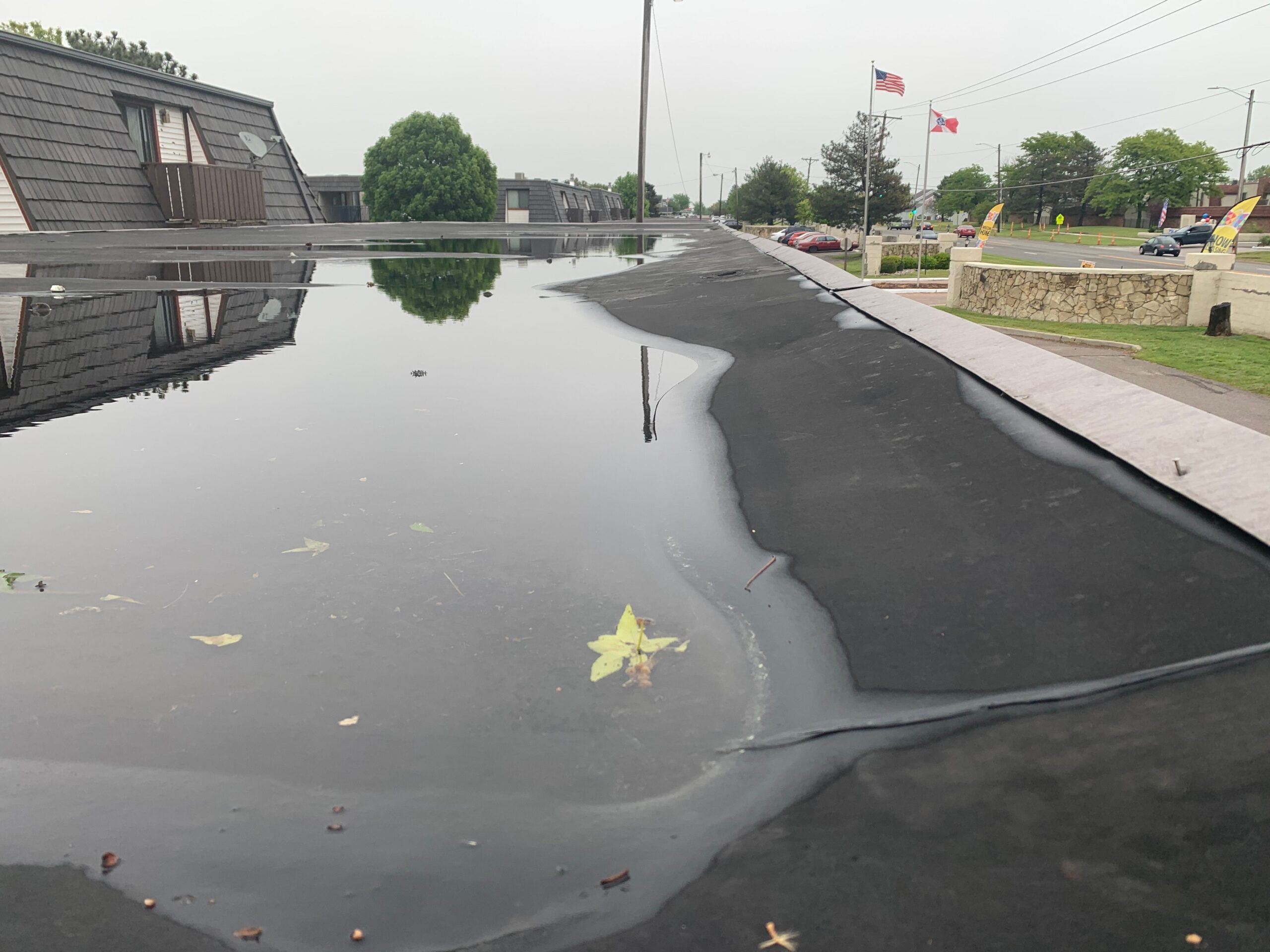
What Causes Ponding Water on Low-Slope Roofs
Ponding water most commonly appears on flat or low-slope commercial roofs after heavy rainfall. Because these roofs are designed with minimal pitch, water can collect in low areas if slope is insufficient or water’s path to the roof’s drainage system is restricted.
Standing water immediately after a storm is normal. However, water that remains standing for more than 48 hours may indicate a drainage or slope issue. Persistent ponding increases stress on the roof membrane Material - A single-ply membrane is a roof coverin... More and can accelerate deterioration.
Roofs are designed to keep water out and channel water away from the building. Ponding suggests that additional slope is necessary for the latter to occur.