
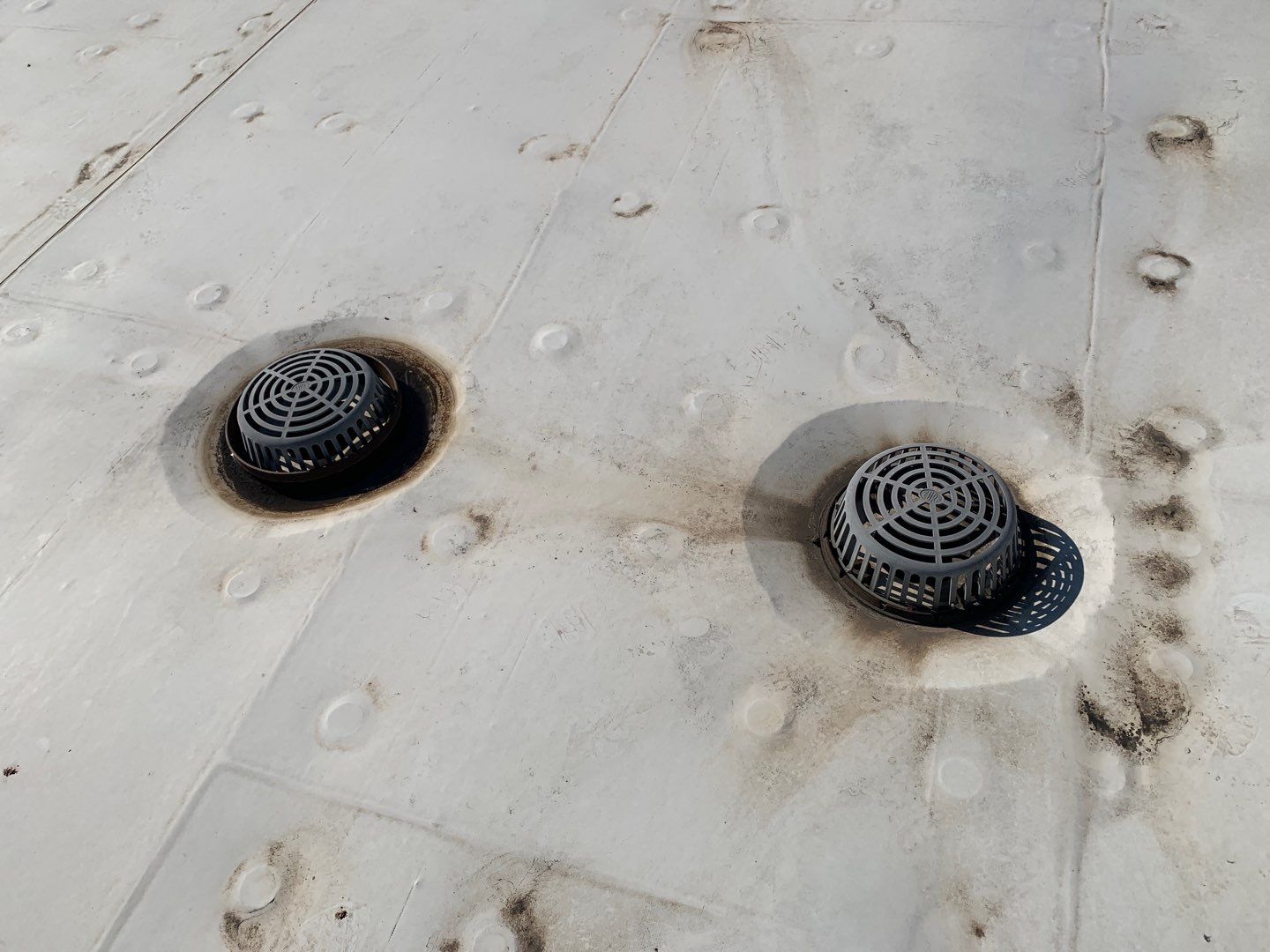
An internal drain placed above the primary internal drain on a low-slope commercial membrane roof.

Overflow Drain

Components - An overflow drain (backup drain) is a secondary roof drain installed above the primary drain to prevent water from accumulating on a roof if the primary drains become blocked or overwhelmed.

Why Overflow Drains Are Used on Low-Slope Roofs

Overflow drains are part of a building’s roof drainage system and are commonly installed alongside internal drains on low-slope commercial roofs, either as scuppers or secondary internal drains.

Property owners often hear the term during roof inspections, drainage evaluations, or when reviewing building codes for commercial roofs. Many building codes require overflow drains to protect the roof from excessive water weight if the primary drains fail.

Without overflow drainage, blocked primary drains allow water to pond on the roof. This can result in water infiltration or even roof collapse in extreme cases, which is why overflow drains are considered a critical safety feature in modern roof design.

Search Terms

Further Reading

Reactive vs Proactive Commercial Roof Maintenance
Clearing drains is a critical function of proactive commercial roof maintenance. This article walks through proactive maintenance’s use-cases, as well as other purposes it serves.

What Is the Difference Between Drains and Scuppers On a Flat Roof?
While backup internal drains and scuppers may serve the same purpose, they have distinct differences.

Commercial Roof Failure Points: Drainage
Roofs are designed to keep water outside the building and channel water off the building. Learn why poor drainage on a commercial roof will cause it to fail at those functions.

Related Terms